They run a few friendly chats. They see a decent answer. They ship.
And then the assistant slowly breaks in production—without throwing a single error.
That’s the difference between a demo bot and a production system.
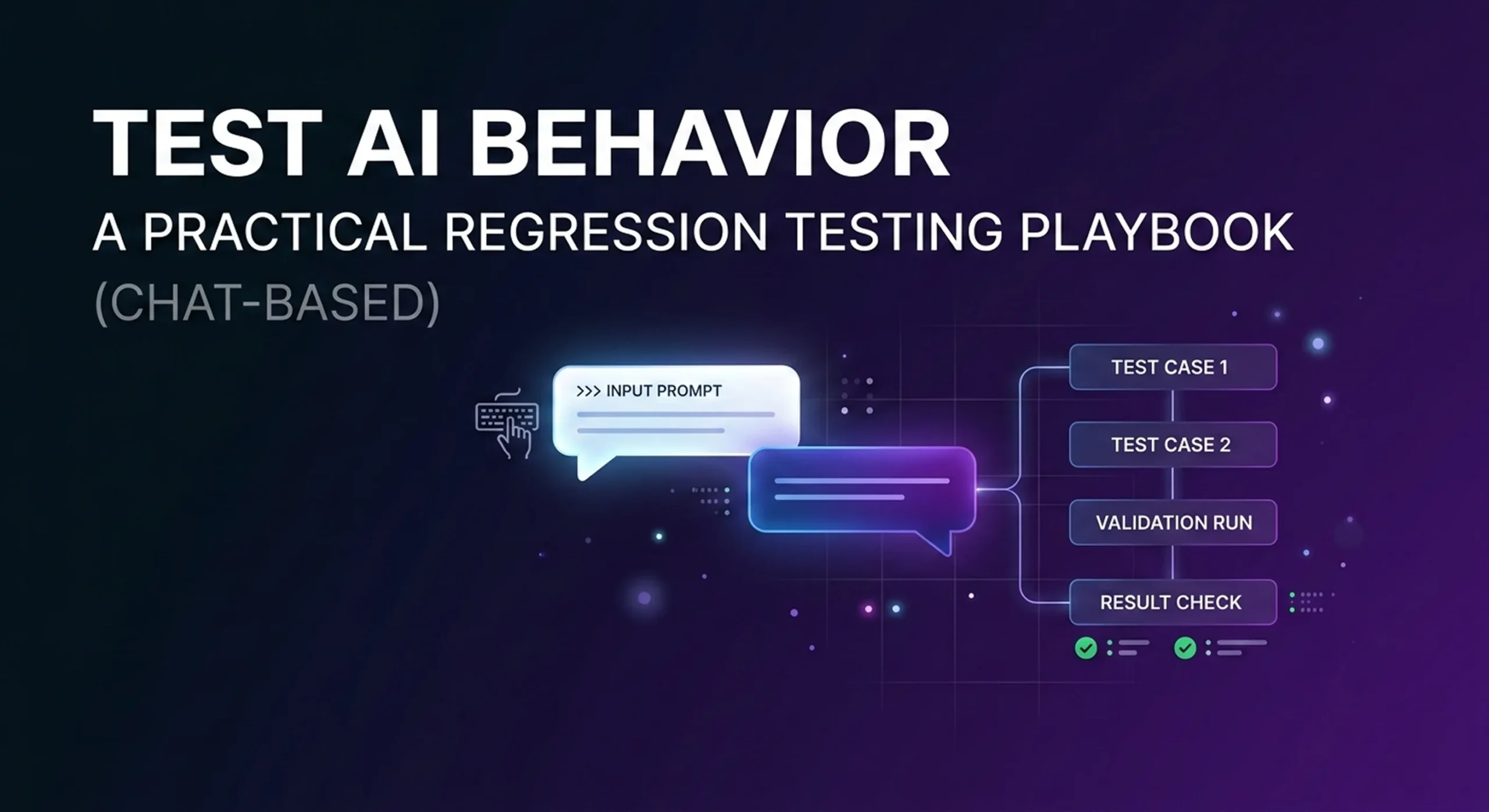
This playbook shows a practical approach to chat-based regression testing for AI agents—so you can keep improving your assistant without breaking what already works.
Why QA for AI agents is different than QA for software
Traditional software testing is deterministic:
input → expected output
AI agent testing is behavioral:
input → acceptable range of outputs, plus:
when to ask clarifying questions
when to escalate to a human
whether the answer is grounded in your knowledge base
whether the agent triggers the correct workflow/action
tone, safety, and policy compliance
In other words, your “unit tests” are conversations.
And the easiest, most reliable place to start is chat: chat transcripts are reviewable, replayable, and perfect for building a regression suite.
Step 1) Define what “pass” means (before you test anything)
Pick 4–6 non-negotiable success signals. For most AI agents, that’s:
Resolution Did the agent solve the request, or correctly escalate?
Accuracy Was the answer grounded in approved sources (KB / policies / data), not guessed?
Action correctness (if you use workflows/tools) Did the right flow run? Was the payload valid? Were required fields captured?
Safety & compliance No hallucinated pricing, refunds, legal claims, or sensitive data leaks.
Clarity Short, helpful, and not confusing.
Consistency Similar inputs shouldn’t lead to wildly different outcomes.
If you can’t define “pass,” you can’t improve reliably.
Step 2) Build a “Golden Conversation Set” from real traffic
Start small:
50 conversations = a solid starter suite
100–200 = strong production coverage
Pull from:
chat logs
support tickets
top FAQ intents
your highest-value business flows (booking, billing, order status, refunds, lead qualification)
For each conversation, label:
Intent
Expected outcome (resolve vs escalate)
Critical facts that must be correct
Required action (if any)
This becomes your baseline. Every change to prompts, KB, or routing must keep these cases passing.
Step 3) Turn conversations into test cases (simple format)
You don’t need a complicated framework. A good test case is:
User says: (1–3 turns)
Agent should:
resolve correctly, OR
ask a specific clarifying question, OR
escalate for a valid reason
Must not:
invent policy/pricing
skip verification steps
trigger the wrong workflow
ignore clear escalation triggers
Keep the rules explicit. You’ll thank yourself later.
Step 4) Add “break tests” (the cases that kill production)
Most failures don’t show up in demos. Add these deliberately:
1) Missing knowledge
User asks something your KB doesn’t cover.
Pass: asks clarifying questions or escalates Fail: guesses confidently
AI agents are getting smarter every month — but in production, accuracy still breaks for the same reason: knowledge.
When customers ask about pricing, policy exceptions, delivery windows, troubleshooting steps, or refunds, your assistant can’t “guess.” It needs a reliable source of truth, clear retrieval, and rules for what to do when information is missing.
Monobot includes a built-in Knowledge Base designed to organize information into categories, improve retrieval with keywords, and keep content editable over time. This article is a practical, step-by-step playbook to build a KB that stays accurate in real conversations — voice or chat.
Why Knowledge Bases fail (and what “good” looks like)
A Knowledge Base fails when it is:
Too broad (one giant document → weak retrieval)
Outdated (policies change, KB doesn’t)
Written like internal docs (hard to answer from, full of context but few conclusions)
Not measurable (no feedback loop, no QA)
A good KB is:
Structured (categories mirror real user intents)
Searchable (keywords/titles reflect how customers ask questions)
Actionable (answers include steps, constraints, and next actions)
Maintained (updates + logging + review process)
Measured (you can see what breaks and fix it)
Step 1) Start with a “Top Questions Inventory” (before writing anything)
Pull 30–100 real questions from:
call transcripts / chat logs
support tickets
FAQ pages
internal SOPs (only as source material)
Then cluster into intents like:
Pricing & plans
Refunds & cancellations
Shipping / delivery / scheduling
Account & billing
Troubleshooting
Compliance / identity verification
Escalation & human handoff
This becomes your category map.
Step 2) Build Knowledge Categories that match customer intent
In Monobot, the Knowledge Base is organized into categories, and you can upload/manage text documents and keep them grouped for better retrieval.
A practical starter structure:
Product & Plans
Billing & Payments
Policies (Refunds, Terms, SLA)
Setup / Onboarding
Troubleshooting (by symptom)
Integrations & APIs (if relevant)
Escalation Rules (when to hand off)
Tip: if a category grows too_expand it_: split by intent (“Billing” → “Invoices”, “Failed payments”, “Plan change”).
Step 3) Write KB entries in “Answer-First” format (not like internal docs)
The #1 upgrade you can make: write the answer customers need first, then supporting details.
Use this template per entry:
Title: Short, customer-style Answer (2–5 lines): The direct resolution Steps: Numbered instructions Constraints / exceptions: Clear bullets Escalation: When to transfer to human
Example (snippet format):
Title: “How do I change my billing email?” Answer: You can update your billing email in Account → Billing Settings. Steps: 1) Open… 2) Click… 3) Save… Constraints: If invoice already issued… Escalation: If you can’t access the account, contact support.
Step 4) Add Keywords like your customers speak
Monobot supports keywords and titles to enhance knowledge retrieval and navigation.
For each entry, add:
synonyms (“refund” / “money back” / “chargeback”)
common misspellings (if frequent)
“how do I…”, “where can I…”, “I can’t…”
This is especially important for voice where users speak naturally and messily.
Step 5) Build guardrails: what the agent should do when KB is missing
Accuracy isn’t just about having an answer — it’s also about refusing to invent one.
Add a short “Policy: uncertainty” section inside your KB or system rules:
If the KB doesn’t contain the answer → ask a clarifying question
If the question affects money/legal/security → offer human handoff
If the customer is angry/urgent → escalate faster
Monobot also supports workflows (Flows) and real-time escalation patterns in its platform content, so you can design consistent outcomes rather than improvisation.
Step 6) Keep the KB fresh with logging and a review loo
A KB isn’t “done.” It’s a living product.
6.1 Log what users actually ask
A simple win: store recurring unknown questions, edge cases, or requests into a structured log.
Monobot provides an action to append structured rows into a CSV linked to a Knowledge Base category — useful for logging tickets, orders, or feedback.
Example logging fields:
date
channel (voice/chat)
intent
question
did KB answer? (Y/N)
escalation? (Y/N)
fix required (new entry / update / workflow)
6.2 Review weekly
Each week:
Add missing entries
Rewrite unclear answers
Merge duplicates
Update policy changes
Step 7) Measure the impact (and prove ROI)
Monobot has a real-time analytics feature set to monitor performance and compare interactions across voice and chat.
Track these KB-driven metrics:
Containment rate (resolved without human)
Escalation reasons (missing KB vs customer request)
Repeat question rate (KB unclear)
AHT change (time-to-resolution)
Top failing intents (where to invest next)
Quick checklist (copy into your internal doc)
List top 50 questions → cluster into 6–10 intents
Create KB categories per intent
Write answer-first entries + steps + exceptions
Add keywords/synonyms per entry
Define “uncertainty rules” + escalation triggers
Log unknown questions into KB CSV
Review weekly + track improvements in analytics
Final thought
The fastest way to improve an AI agent isn’t swapping models — it’s building a knowledge layer that’s structured, retrievable, and continuously maintained.
If you’re building with Monobot, start small: 6 categories, 50 entries, one logging table — and iterate weekly. Your accuracy (and customer trust) will climb immediately.
Want to see how Monobot handles knowledge + workflows in practice? Explore the platform and book a demo to map it to your use case.
AI assistants are everywhere. But only a small percentage of them survive real-world usage.
Most companies launch an AI assistant with high expectations — and quietly abandon it months later. Not because AI doesn’t work, but because production reality is very different from demos.
In this article, we’ll look at why AI assistants fail after launch — and how platforms like Monobot are designed to avoid these pitfalls from day one.
1. The “Demo Effect”: AI Works… Until It Doesn’t
Many AI assistants perform well in controlled demos:
scripted conversations
predictable user inputs
ideal conditions
Once real users arrive, things change fast:
users speak differently than expected
requests are incomplete or ambiguous
conversations jump between topics
edge cases appear constantly
Without strong conversation logic, fallback strategies, and escalation paths, assistants break — and user trust disappears.
Production AI must be designed for chaos, not perfection.
2. Lack of Action: When AI Can Talk but Can’t Do
One of the most common failures is this:
The assistant understands the request — but can’t actually complete it.
Examples:
Can’t book an appointment
Can’t update CRM records
Can’t calculate prices or availability
Can’t trigger internal workflows
In these cases, AI becomes an expensive FAQ interface.
Modern businesses need AI agents that take actions, not just generate text.
That’s why Monobot is built around:
workflow execution
API integrations
system-level actions
real business outcomes
3. No Clear Human Handoff Strategy
Another critical mistake: either no human handoff — or a bad one.
Common problems:
context is lost during transfer
users must repeat themselves
agents receive no conversation history
switching channels breaks the flow
In production environments, hybrid AI is essential.
Monobot ensures:
seamless AI → human escalation
full conversation context preserved
same channel continuity
minimal friction for both users and agents
Automation should reduce effort — not add frustration.
4. Overengineering or Underengineering the Logic
Some teams overbuild:
complex prompts
brittle logic
hardcoded flows
Others underbuild:
no validation
no intent control
no guardrails
Both approaches fail at scale.
Production AI needs:
visual, controllable logic
clear decision points
validation layers
error recovery paths
With Monobot Flows, teams can manage complexity visually — adjusting logic without rewriting the system.
5. No Feedback Loop = No Improvement
Many assistants fail silently.
Teams don’t know:
where users drop off
which intents fail
when escalation happens too often
which answers cause confusion
Without analytics and feedback loops, improvement is impossible.
Monobot provides visibility into:
conversation outcomes
resolution rates
handoff frequency
performance over time
AI assistants should evolve — not stagnate.
What “Production-Ready AI” Actually Means
A production-ready AI assistant is not defined by how smart it sounds.
It’s defined by whether it can:
handle real users
operate across channels
execute actions
fail gracefully
escalate intelligently
improve continuously
This is the philosophy behind Monobot.
Final Thoughts
AI assistants don’t fail because the technology isn’t ready. They fail because they’re built for demos — not for reality.
If you’re building AI for real customers, real calls, real pressure — you need infrastructure, workflows, and hybrid intelligence.
How AI Content Generation Can Enhance Your Monobot Knowledge Base and Customer Experience
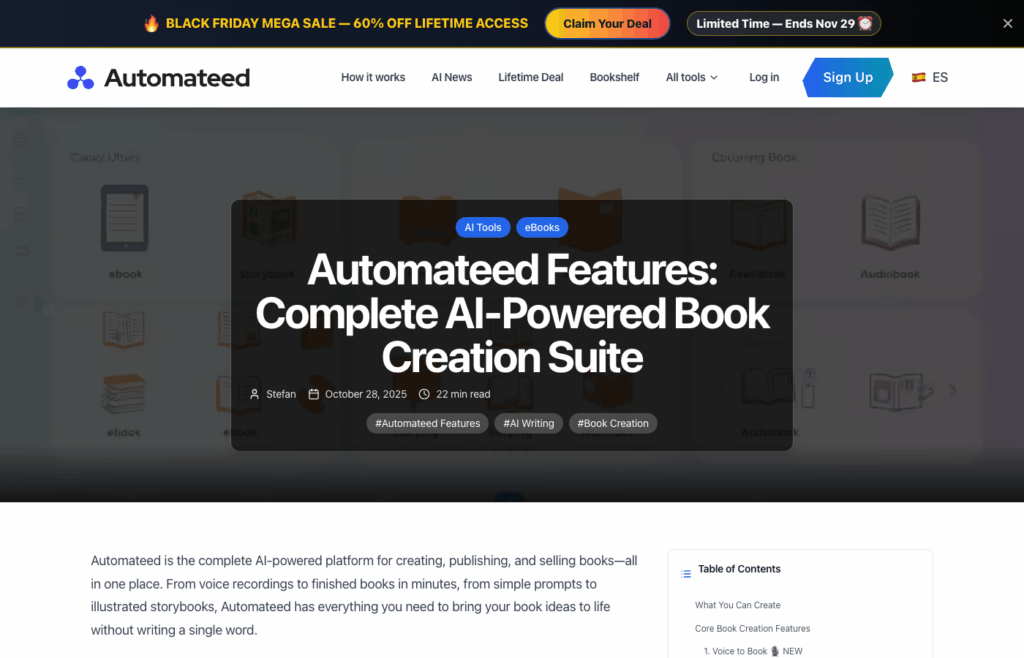
In today’s AI-driven landscape, businesses need comprehensive solutions that work together seamlessly. For companies leveraging voice AI platforms like Monobot to automate customer interactions, having robust knowledge resources and content is essential for success. Automateed provides exactly that—an AI-powered platform that transforms ideas into professional, publish-ready books, guides, and training materials in minutes instead of months.
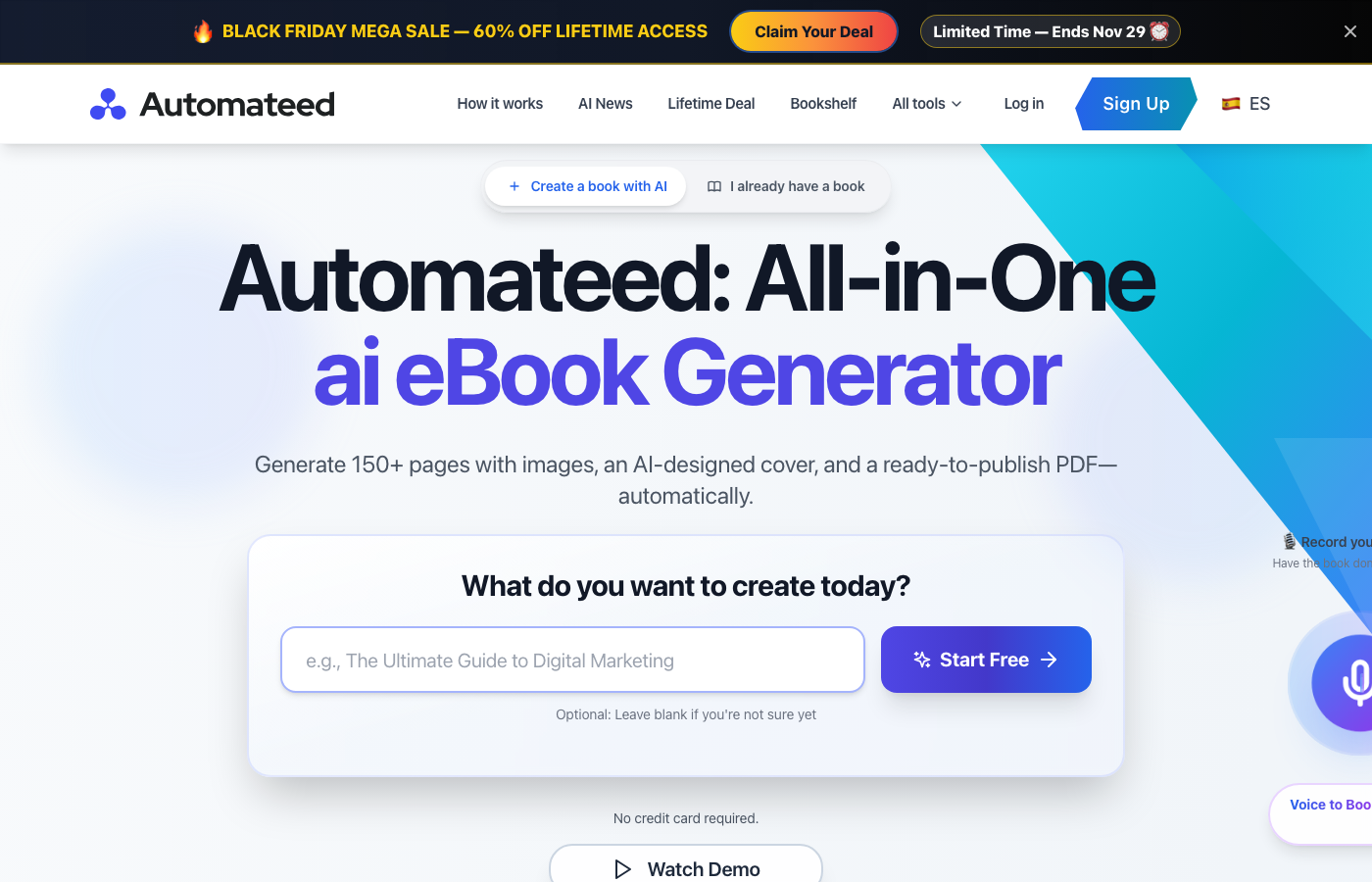
Automateed is the #1 AI eBook Creator—a complete platform for creating, publishing, and selling books. From voice recordings to finished books in minutes, from simple prompts to illustrated storybooks, Automateed handles everything you need to bring your book ideas to life without writing a single word.
What You Can Create:
Professional eBooks with AI-generated content, images, and covers
Illustrated children’s storybooks with character-driven narratives
Printable coloring books for adults and children
Audiobooks with natural-sounding AI voices in 98+ languages
Professional book covers with AI-generated artwork
Translated books in 50+ languages
Complete books from voice recordings in minutes
Automateed Features Dashboard — Complete Suite of AI Book Creation Tools
Core Book Creation Features
1. Voice to Book 🎙️
NEW — Transform your spoken words into complete books without typing. Simply record up to 30 minutes of voice, and AI handles transcription, chapter creation, images, and cover design automatically.
🎯 Perfect For Busy professionals, non-native English speakers, people with accessibility needs, and anyone who prefers speaking to typing.
Key Features:
98+ languages with auto-detection
Automatic title and chapter extraction from speech
AI-generated images and covers
Complete books in 3-5 minutes
2. AI eBook Creator 📚
Create professional eBooks from simple prompts or detailed outlines. The AI generates complete chapters (800-900 words per subchapter), adds relevant images, and designs beautiful covers—all customized to your specifications.
🎯 Perfect For Authors, marketers, educators, content creators, and businesses creating knowledge resources.
Key Features:
Generate from prompts or upload DOCX files
800-900 words per subchapter with coherent flow
Multiple professional cover templates (18+ styles)
AI images for every chapter
Full editing and customization capabilities
3. AI Storybook Creator 🌟
Creating illustrated children’s books traditionally requires two expensive skills—writing engaging stories AND creating professional illustrations. Most aspiring children’s book authors have one skill but not both. AI Storybook Creator solves this by generating complete illustrated storybooks in 10-15 minutes: engaging age-appropriate narratives paired with beautiful, consistent illustrations featuring your characters.
The Magic: Character Consistency — Describe a character once (“a brave little rabbit with brown fur and a red scarf”), and that character appears exactly the same throughout your entire book. This consistency is crucial for professional children’s books and typically requires expensive illustrators.
🎯 Perfect For Parents creating personalized bedtime stories, teachers developing educational storybooks, aspiring children’s book authors, publishers producing multiple titles, and grandparents making unique gift books.
Key Features:
Character creation with visual consistency across all pages
Age-appropriate content (3-5, 6-8, 9-12 age groups)
Generate professional-quality coloring books with intricate black and white line art in minutes. Create therapeutic adult coloring books with mandalas and botanical designs, or fun children’s activity books with animals and characters. Each page features perfect line thickness optimized for coloring—not too thin to cause bleeding, not too thick to look cartoonish.
🎯 Perfect For Artists building coloring book businesses, publishers creating activity books, therapists providing stress-relief materials, and educators making learning activities.
Key Features:
Black & white line art with perfect thickness for coloring
Your book cover is the first thing readers see—make it count. Design professional, genre-appropriate book covers in minutes without hiring designers or learning complex software. With 18+ professionally designed templates covering every major genre, AI-generated custom artwork, and full customization options, create covers that look like they cost $500 but take only 2-3 minutes.
Available Templates: Classic, Modern, Elegant, Bold, Artistic, Clean, Geometric, Dynamic, Circular, Cyber, Minimal, Monochrome, Holographic, Vaporwave, Editorial Split, Paper Collage, and more.
Key Features:
18+ professional templates for every genre
AI-generated custom artwork from text descriptions
Full text customization (fonts, sizes, colors, positioning)
High-resolution export (3000×3000 pixels minimum)
Amazon KDP specifications met automatically
6. Audiobook Generator 🎧
Audiobooks are the fastest-growing segment of book publishing, but traditional production is expensive—professional narrators cost $100-300 per finished hour. Automateed’s Audiobook Generator eliminates these barriers by converting any ebook into professional-quality audiobooks with natural-sounding AI voices in just 5-10 minutes.
Key Features:
98+ languages and dialects supported
Multiple voice options per language (male, female, various accents)
Natural-sounding narration with proper pronunciation and emotion
High-quality audio output (44.1kHz, 128kbps)
Audible ACX compatible MP3 format
7. Book Translator 🌍
The English-language market represents only 20% of global book readers. Translating your books opens access to billions of readers—but traditional translation costs $0.08-0.15 per word ($2,400-$4,500 for a 30,000-word book). AI Book Translator delivers professional-quality translation in minutes for a fraction of the cost.
The AI doesn’t just translate words—it preserves meaning, tone, cultural context, and even idioms. A joke in English becomes a culturally appropriate joke in Spanish, not a literal (confusing) word-for-word translation.
Key Features:
50+ language pairs supported
Context-aware translation preserving idioms and cultural references
Batch processing to multiple languages simultaneously
Advanced Tools & Resources
8. Market Research Tool 📊
Publishing without market research is gambling. Market Research Tool provides professional-grade market intelligence in minutes: discover topics with proven reader demand, identify niches with opportunity (high demand, manageable competition), and make data-driven decisions that maximize your publishing ROI.
Key Features:
Keyword search volume analysis with exact monthly searches
Competition assessment with market saturation scoring
Trend discovery and forecasting with seasonal patterns
Long-tail keyword discovery for less competitive phrases
9. Publisher Platform 🏪
Every author needs an online presence, but building a professional website costs $500-2,000 upfront plus monthly hosting. Publisher Platform gives you a beautiful, professional author homepage in 10 minutes—no coding, hosting fees, or technical knowledge required.
Key Features:
Professional publisher profiles with bio, photo, social links
Unlimited book landing pages with dedicated pages per book
Full customization (brand colors, layout, fonts)
Built-in analytics dashboard tracking visitors and clicks
SEO-optimized structure for Google ranking
Mobile-responsive design
10. AI Images Generator 🖼️
Every book needs images. Stock photos are generic, hiring illustrators is expensive ($50-500 per image). AI Images Generator creates exactly what you need in seconds from simple text descriptions. Full commercial use rights included.
Text-to-image generation from plain English descriptions
High-resolution output up to 2048px for web and print
Various aspect ratios for different platforms
Commercial use rights with no restrictions
11. Book Editor ✏️
First drafts are just the beginning. Book Editor provides professional-grade editing tools with AI assistance to transform good content into exceptional books. The AI editing assistant acts like a professional editor working alongside you 24/7.
Key Features:
Rich text editor with complete formatting options
AI writing assistance (grammar, clarity, style, tone)
Chapter-by-chapter navigation with drag-and-drop reordering
Multi-format preview (Kindle, print, mobile)
Export flexibility (PDF, EPUB, DOCX, HTML)
Auto-save with revision history
How Automateed Enhances Your Monobot Experience
Monobot excels at automating customer interactions through intelligent voice and chat agents. But exceptional customer experience requires more than real-time conversations—it demands comprehensive knowledge resources, training materials, and content that empowers both AI agents and human teams. This is where Automateed and Monobot work together beautifully.
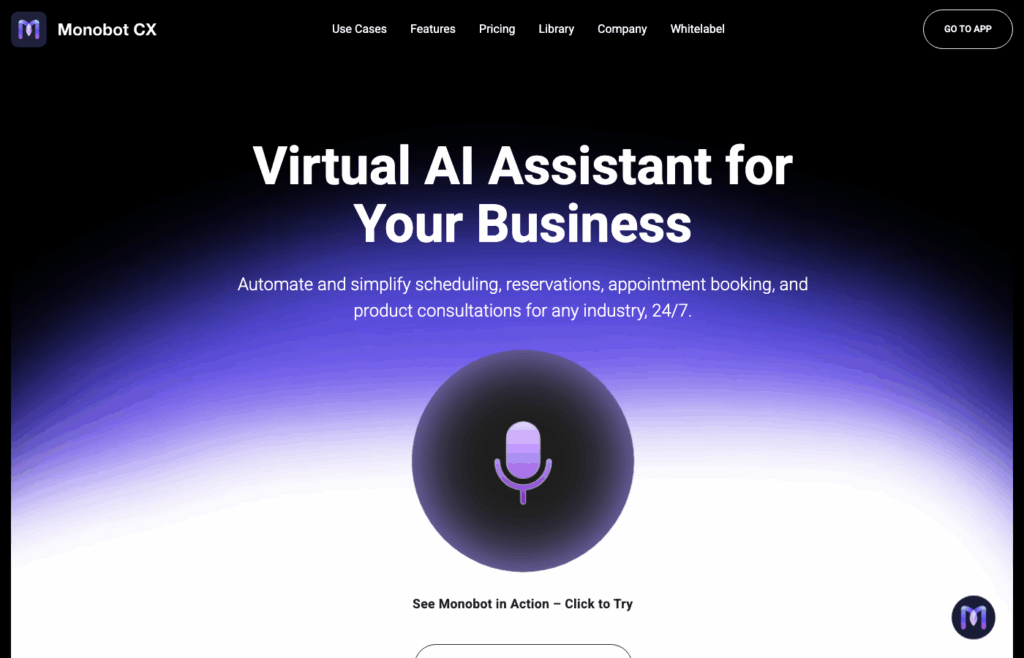
Monobot AI — Virtual AI Assistant for Business (www.monobot.ai)
Building Comprehensive Knowledge Bases
Monobot’s AI agents rely on knowledge bases to provide accurate responses. With Automateed, you can quickly generate detailed guides, FAQs, instructional content, and documentation that feeds directly into your Monobot knowledge base. Create structured documentation covering every aspect of your products or services—from setup guides to troubleshooting manuals—ensuring your AI voice agents have the information they need to assist customers effectively.
Creating Customer-Facing Resources
While Monobot handles real-time voice and chat interactions, Automateed empowers you to create downloadable resources that customers can access anytime. Generate user manuals, onboarding guides, best practice eBooks, and comprehensive how-to documents that complement your AI-powered support. These resources can be offered through your website, email campaigns, or even mentioned by your Monobot agents during conversations.
Lead Generation & Marketing Content
Both platforms share a common goal: helping businesses grow. Use Automateed to create compelling lead magnets—industry reports, educational eBooks, and whitepapers—that attract potential customers to your business. Once leads enter your funnel, Monobot’s AI agents can qualify them, answer questions, and schedule appointments automatically. It’s a seamless journey from content attraction to intelligent conversation.
Internal Training & Team Empowerment
For businesses using Monobot’s AI Workspace to empower their human agents, Automateed can generate comprehensive training materials. Create onboarding guides for new team members, standard operating procedures, and reference manuals that help your support staff work alongside AI agents more effectively. The result? A well-informed team that delivers exceptional customer experiences.
Multi-Language Global Reach
Monobot supports multiple languages for voice interactions, and Automateed offers one-click translation to 100+ languages. This synergy means you can create customer resources in any language your audience speaks, maintaining consistent messaging across all touchpoints. Whether it’s a support guide in Spanish or a product manual in German, both platforms help you serve global customers with ease.
Key Benefits of the Automateed + Monobot Approach
Benefit
Description
⚡ Speed
Generate comprehensive content in minutes, not months. Create books while Monobot handles real-time interactions.
🎯 Consistency
Maintain brand voice and messaging across all channels—from AI voice conversations to written resources.
📈 Scalability
Both platforms grow with your business. Handle more conversations with Monobot while producing more content with Automateed.
💰 Cost Efficiency
Reduce resources needed for content creation and customer support. AI does the heavy lifting.
Every feature follows a simple, streamlined workflow:
Step 1: Choose Your Feature Select what you want to create: eBook, storybook, coloring book, audiobook, or cover.
Step 2: Provide Your Input Voice recording, text prompt, DOCX upload, or character descriptions—depending on the feature.
Step 3: AI Does the Work Advanced AI generates content, creates illustrations, produces narration, and formats everything professionally.
Step 4: Review and Customize Every creation is fully editable. Refine content, adjust images, and perfect every detail.
Step 5: Publish and Sell Download in multiple formats (PDF, EPUB, DOCX, MP3) and publish anywhere—or use Publisher Platform to sell directly.
Getting Started with Automateed
Ready to enhance your customer experience with AI-generated content? Here’s how to begin:
1. Visit automateed.com — Sign up for a free trial—no credit card required.
2. Choose your first project — Start with Voice to Book for the easiest experience, or AI eBook Creator for maximum control.
3. Let AI create your content — Watch as chapters, visuals, and covers are generated in minutes.
4. Download and integrate — Export in your preferred format and integrate with your Monobot knowledge base or customer resources.
Conclusion
In the age of AI, success comes from combining the right tools. Monobot revolutionizes how businesses handle customer conversations through intelligent voice and chat agents. Automateed transforms how businesses create content at scale. Together, they offer a comprehensive solution for modern customer experience.
Whether you’re building a knowledge base, generating leads, creating training materials, or producing customer-facing resources, the combination of Monobot’s conversational AI and Automateed’s content generation capabilities provides everything you need to deliver exceptional customer experiences.
🚀 Ready to transform your content creation process?
About Automateed Automateed is the #1 AI eBook Creator, trusted by 45,000+ users worldwide. The platform enables anyone to create professional eBooks in minutes—complete with AI-generated content, stunning covers, and chapter illustrations. Founded by Stefan, an AI pioneer who built his first successful agency at a young age, Automateed democratizes AI for everyone, making powerful content creation tools accessible to entrepreneurs regardless of technical background.
How an AI Voice Agent Transformed a Transportation Business
The Challenge
Recently, we encountered an interesting case that perfectly illustrates the value of AI agents in real-world operations. A customer, who owns a bus charter company in California, reached out to the Monobot team with a very relatable problem.
As both the owner and a driver, he prefers to communicate directly with clients, understanding the importance of not missing a lead or leaving a customer feeling unattended. However, while driving, it’s nearly impossible to take notes, check a calendar, or send confirmations. Juggling customer calls and admin tasks behind the wheel isn’t just uncomfortable; it’s unsafe and inefficient.
The Solution
To address this, we built a custom AI voice bot that seamlessly joins every call. Here’s how it works:
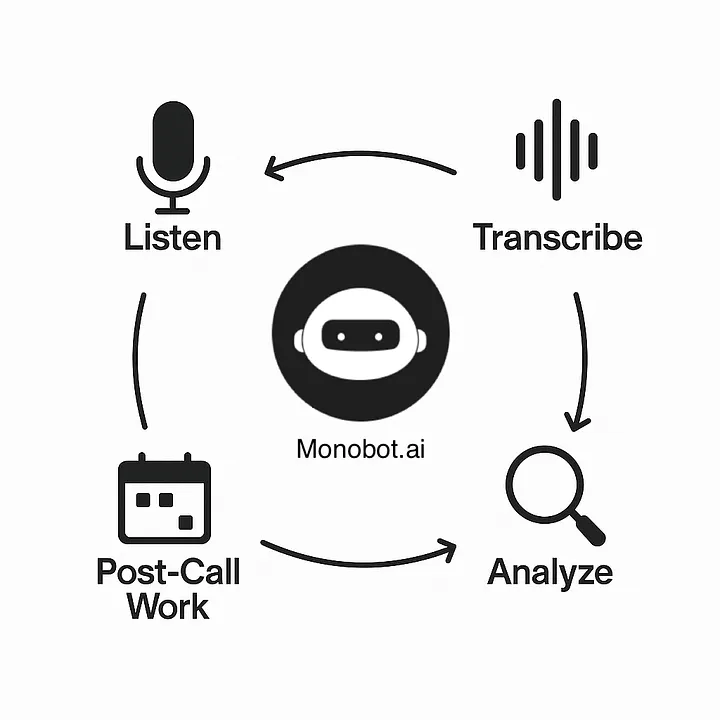
Silent Listening & Transcription: The AI agent is always on the call, silently listening and transcribing every conversation in real-time.
Post-Call Automation: After each call, the bot analyzes the conversation, creates calendar events, sends confirmation emails, and even verifies addresses and availability — handling all the admin tasks automatically.
“Hey Monobot” Activation: We also introduced a voice trigger feature, “Hey Monobot.” When this phrase is spoken, the bot becomes active — able to answer questions (e.g., about fleet availability) during the call.
Privacy Control: The bot can temporarily put the other participant on hold, allowing the business owner to discuss sensitive details privately.
The Feedback
After just one day, our client shared this with us:
“Just wanted to say that I used Monobot to its full potential today, without writing down any of the information — and I loved it.”
The Impact
Within a week, the “Hey Monobot” feature became a game-changer. No more scribbling notes or struggling to recall details after a long day on the road. The business runs smoother, the owner stays focused on what matters, and no lead is ever lost due to missed details.
The Future
We believe this is just the beginning for AI-powered assistants in transportation — and beyond. By putting an AI agent in the loop, we’re helping business owners work smarter, not harder.
The landscape of customer service is undergoing a dramatic transformation, driven by the rapid advancement of artificial intelligence and chatbot technology. In 2024, AI-powered chatbots have evolved from simple rule-based systems to sophisticated conversational agents capable of understanding context, learning from interactions, and providing human-like responses.
The Evolution of Chatbots
From Rule-Based to AI-Powered
Traditional chatbots operated on predefined rules and decision trees, offering limited functionality and often frustrating user experiences. Today’s AI chatbots leverage natural language processing (NLP), machine learning, and deep learning algorithms to understand user intent and provide meaningful responses.
Key Technological Breakthroughs
1. Natural Language Processing (NLP): Advanced NLP models like GPT-4 and Claude have revolutionized how chatbots understand and generate human language
2. Context Awareness: Modern chatbots can maintain conversation context across multiple interactions
3. Multimodal Capabilities: Integration of text, voice, and visual elements for richer interactions
4. Personalization: AI algorithms that learn user preferences and adapt responses accordingly
Benefits of AI Chatbots for Businesses
24/7 Availability
AI chatbots provide round-the-clock customer support, ensuring that customers can get assistance whenever they need it, regardless of time zones or business hours.
Cost Efficiency
By handling routine inquiries and support requests, AI chatbots can significantly reduce operational costs while freeing up human agents for complex issues.
Scalability
Unlike human agents, AI chatbots can handle thousands of conversations simultaneously without compromising quality or response times.
Consistency
AI chatbots provide consistent responses and follow company policies without variation, ensuring uniform customer experience.
Real-World Applications
E-commerce
AI chatbots are revolutionizing online shopping by providing personalized product recommendations, handling order tracking, and managing returns and exchanges.
Healthcare
In the healthcare sector, AI chatbots are assisting with appointment scheduling, providing basic medical information, and offering mental health support.
Banking and Finance
Financial institutions are using AI chatbots for account inquiries, transaction history, and basic financial advice.
Travel and Hospitality
Travel companies are leveraging AI chatbots for booking assistance, itinerary management, and customer support during trips.
Challenges and Considerations
Privacy and Security
As AI chatbots handle sensitive customer data, ensuring privacy and security is paramount. Companies must implement robust security measures and comply with data protection regulations.
Human Oversight
While AI chatbots are becoming increasingly sophisticated, human oversight remains essential for complex issues and quality assurance.
Integration Complexity
Implementing AI chatbots requires careful planning and integration with existing systems and workflows.
The Future of AI Chatbots
Predictive Analytics
Future AI chatbots will leverage predictive analytics to anticipate customer needs and provide proactive support.
Emotional Intelligence
Advancements in emotion recognition technology will enable chatbots to understand and respond to customer emotions.
Voice and Visual Integration
The integration of voice recognition and computer vision will create more immersive and natural interaction experiences.
Conclusion
The AI chatbot revolution is reshaping customer service and business operations across industries. As technology continues to advance, we can expect even more sophisticated and capable AI chatbots that will further enhance customer experiences and business efficiency.
Companies that embrace this technology early and implement it strategically will gain significant competitive advantages in their respective markets.
—
This article explores the transformative impact of AI chatbots on modern business operations and customer service. Stay tuned for more insights on AI technology and its applications.
The transportation industry has been undergoing a major digital transformation, with businesses leveraging cutting-edge technologies to enhance customer experiences and streamline operations. Conversational AI is at the forefront of this revolution, transforming how transportation companies interact with passengers and manage their services.
From ride-sharing platforms to public transportation systems, conversational AI is reshaping the future of mobility by providing intelligent, personalized, and efficient customer service solutions.
How Conversational AI Transforms Transportation
1. Intelligent Booking and Reservations
Conversational AI systems revolutionize the booking process by:
Processing natural language booking requests
Providing real-time availability and pricing information
Handling complex multi-leg journey planning
Managing cancellations and modifications seamlessly
In today’s rapidly evolving digital landscape, customer expectations have significantly grown, creating the necessity for businesses to deliver fast, accurate, and personalized service around the clock. Traditional customer service models are struggling to keep up with these demands.
AI virtual assistants are revolutionizing customer service by providing intelligent, scalable, and cost-effective solutions that transform how businesses interact with their customers.
How AI Virtual Assistants Transform Customer Service
1. 24/7 Availability
AI virtual assistants provide:
Round-the-clock customer support
Instant response to inquiries
Consistent service quality
No waiting times or queues
Global accessibility across time zones
2. Intelligent Problem Resolution
Virtual assistants can:
Understand and categorize customer issues
Provide immediate solutions to common problems
Escalate complex issues to human agents
Learn from interactions to improve future responses
Maintain context across conversation threads
3. Personalized Customer Experience
AI assistants deliver:
Tailored recommendations based on customer history