



Call summarization AI turns a raw recording into a short recap plus structured fields like action items, owners, and deadlines, so teams can act on calls without replaying them. The payoff is faster follow-up, cleaner CRM data, and easier quality review. The caveat: accuracy, privacy, and bias all vary by vendor, so every rollout needs evaluation before you trust it at scale.
TL;DR:
- Pair readable abstractive recaps with extractive, verified fields, then limit CRM output to six to eight consistent fields such as owners, deadlines, and risks.
- Transcription errors in names, figures, or speaker attribution carry into summaries, so assess accents, industry terms, and call audio before judging model output.
- Language models can expose personal information and distort which calls receive coverage; anonymize outputs and audit bias before trusting summaries in regulated workflows.
- Treat the first month as a measured pilot: review every summary initially, and sample 10% only after fidelity remains steady against defined accuracy targets.
- Sales teams can sync discovery details and next steps to CRMs, while support teams preserve ticket context so customers do not repeat themselves.
Table of Contents
- What a call summarizer actually produces
- How call summarization actually works, step by step
- Where call summaries deliver the most value
- The accuracy, bias, and privacy risks worth knowing before you scale
- Turning summaries into reliable CRM and workflow data
- Why most pilots fail before the technology does
- Where Monobot fits if you want to pilot this
- FAQ
- Sources
What a call summarizer actually produces
A call summarizer generates two things, and both matter. The first is a short narrative recap, usually a paragraph, that captures what the call was about. The second, and the part that makes summaries useful at scale, is a set of structured fields pulled from the conversation: action items, owners, deadlines, decisions made, and risk flags worth escalating.
Vendors differ wildly in what they bundle around that core. Some add time-stamped highlights so you can jump to the moment a price was quoted. Others overlay sentiment scores across the call, or tag topics automatically for reporting. These extras are nice, but they are not the point.
The structured fields are the point, because a paragraph you have to re-read is not much better than a transcript you have to re-read. Fields that map directly into a CRM or ticketing system are what turn a summary into a task someone can act on.
- Narrative recap: a short paragraph covering the call’s purpose and outcome.
- Action items with owners: who does what, extracted automatically rather than typed by hand.
- Decisions and deadlines: commitments made on the call, with dates where they were stated.
- Risk flags: churn signals, compliance mentions, or escalation triggers worth a manager’s attention.
How call summarization actually works, step by step
Everything downstream depends on transcription quality. If the automatic speech recognition (ASR) layer mishears a product name or a dollar figure, every summary built on that transcript inherits the error. Domain vocabulary, accents, and audio conditions (crosstalk, background noise, poor phone lines) all push accuracy up or down before summarization ever starts.
- Transcription (ASR): audio becomes text, ideally tuned to your industry’s terms and acronyms.
- Diarization and speaker attribution: the system separates who said what, which is what lets “action item: Priya to send contract” actually name Priya instead of “Speaker 2.”
- Enrichment: entity extraction, sentiment scoring, timestamping, and keyword spotting layer context onto the raw transcript.
- Summarization: a model condenses the enriched transcript into the recap and structured fields.
That last step comes in three flavors. Extractive summarization pulls verbatim sentences from the transcript, which is safe but often choppy. Abstractive summarization writes new sentences in its own words, which reads better but carries higher hallucination risk. Hybrid approaches, abstractive prose layered on top of extractive, verified structured fields, give you the best of both: a readable recap plus fields you can trust enough to automate against. Teams that pair narrative recaps with structured output this way tend to get summaries that actually feed CRM and workflow systems instead of sitting in an inbox.
Where call summaries deliver the most value
Not every team gets the same return from the same feature, so it helps to match the output to the job.
- Sales teams use summaries to capture discovery details, log objections, and sync next steps to the CRM, which tightens forecasting because the pipeline reflects what was actually said instead of what a rep remembered to type.
- Support teams get ticket context automatically, cutting resolution time because the next agent does not have to ask the customer to repeat themselves, and escalations carry a documented trail.
- QA and coaching teams use highlight clips and auto-scored calls to give agents specific feedback instead of generic notes, turning review from a sampling exercise into something closer to full coverage.
- Product and research teams roll up themes across hundreds of calls to spot recurring feature requests or friction points, work that would otherwise take a human reading transcripts for days.
The common thread is that summaries save the most time where someone was already taking notes by hand, and they add the most value where those notes used to feed a downstream system like a CRM, a ticket, or a coaching scorecard.
The accuracy, bias, and privacy risks worth knowing before you scale
The main failure modes are predictable once you know to look for them: hallucinated details that were never said, omitted commitments, mixed-up speaker attribution, and a subtler problem called operational bias, where a model systematically overrepresents or underrepresents certain kinds of calls.
Research on this is direct. Language-model summarizers can leak personally identifiable information into their outputs, and anonymization workflows measurably reduce that risk. A “Summarize & Anonymize” pattern, where the model summarizes first and strips identifying details second, tends to preserve quality while cutting leakage in the final text.
Bias is just as well documented. Operational bias shows up across many large language models used for call summarization, and targeted prompting built from bias audits can measurably close coverage gaps without retraining the underlying model, though larger models tend to benefit more from the fix.
Pro Tip: Run a 200-call sample through anonymize-then-summarize before you enable any automated CRM write, and keep a human reviewer on every summary until that sample passes your accuracy bar.
Ask any vendor you evaluate for their test dataset, their audit log policy, and how often they sample outputs for review. A system that cannot answer those questions is not ready for anything you plan to automate against.

Turning summaries into reliable CRM and workflow data
A summary only earns its keep once it maps cleanly to the system your team already works in. Pick a fixed set of fields, six to eight is enough, and require every summary to populate them the same way every time.
- Call outcome (won, lost, resolved, escalated) maps to a CRM stage or ticket status.
- Action items with owners map to tasks assigned in your CRM or ticketing tool.
- Deadlines or follow-up dates map to reminder or sequence fields.
- Key decisions map to notes or deal-history fields auditors can check later.
- Risk or escalation flags map to alert fields that route to a manager.
- Sentiment or satisfaction signal maps to a QA scorecard field.
Before any of that goes live, run a pilot: set an audio quality baseline, define a transcription accuracy target, put a sample-review service level agreement in place, run integration smoke tests against your CRM, and confirm your consent and retention policies cover recorded calls.
Once the pilot clears its targets, shift from reviewing every summary to reviewing a sample, track coverage and fidelity on a dashboard, and use occasional LLM-as-judge audits to catch drift. Automations like auto-writing routine fields can wait until that monitoring is in place.
Pro Tip: Start with “review always” for the first two weeks of a pilot, then move to “review a random 10 percent” only after your fidelity metric holds steady.
Why most pilots fail before the technology does

The technology is rarely the reason a call summarization pilot stalls. Teams move too fast to full automation, skip the step where they tune extraction fields against their own call types, and never establish a baseline to measure against, so nobody can tell if the rollout actually helped.
My honest read is that the teams getting real value treat the first month as a measurement exercise, not a deployment. They pick one use case, keep a human reading every summary, and adjust the prompt or the field list weekly based on what the human catches. Only once fidelity holds steady do they loosen review and let the system carry more weight. Skipping that step is the single most common reason a promising tool gets quietly abandoned three months in.
— Alex
Where Monobot fits if you want to pilot this
We built Monobot around the idea that a summary is only useful once it is structured, reviewable, and connected to the tools your team already uses. Our platform pairs real-time transcription with structured extraction, so action items and owners land in a format your CRM or ticketing system can actually use, not just a paragraph someone has to parse.
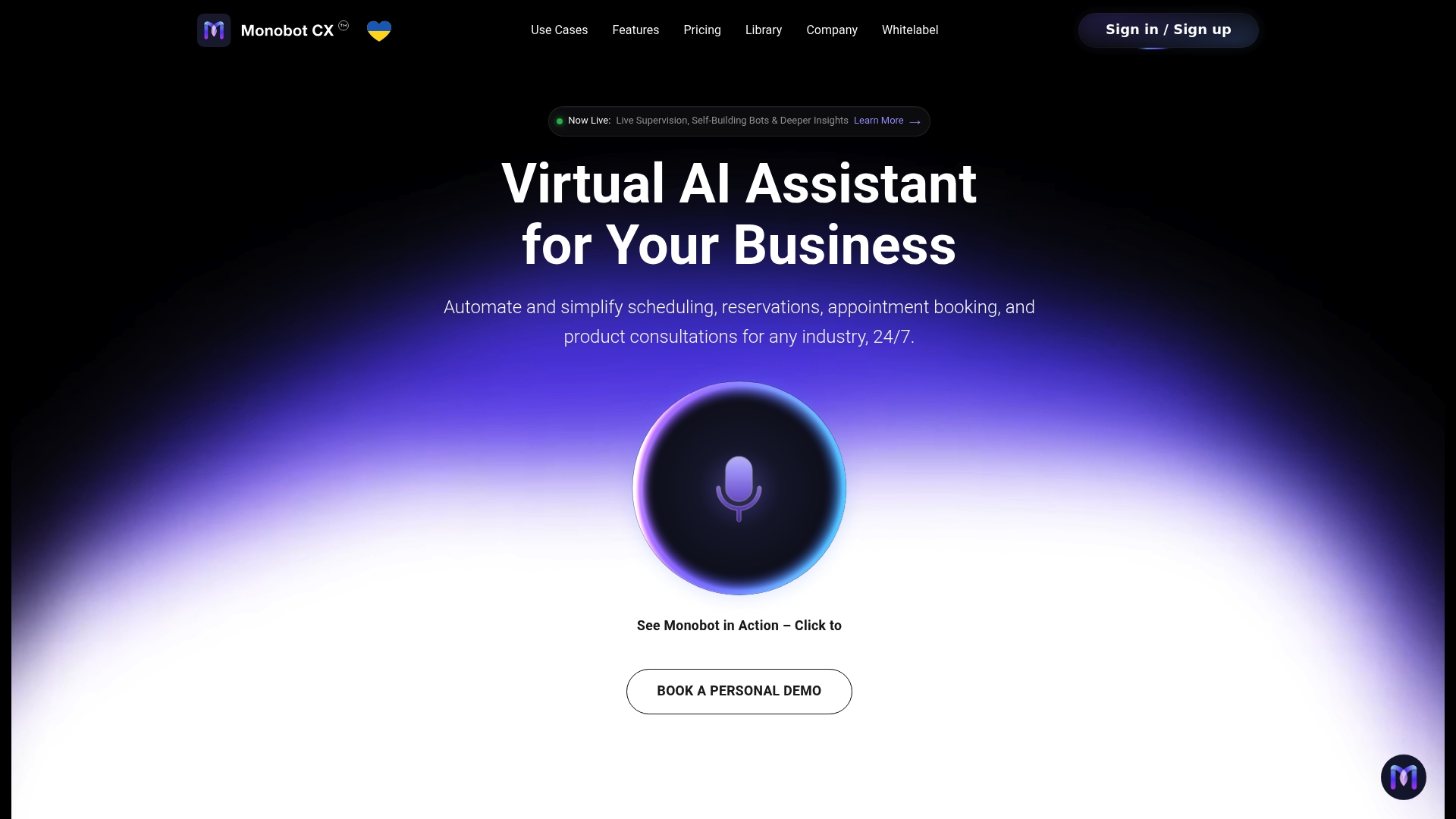
- Real-time transcription: calls are captured and transcribed as they happen, feeding summaries without a separate upload step.
- Structured extraction: action items, owners, and deadlines come out as fields, not prose.
- Workspace for human review: our Workspace gives reviewers a place to check and correct summaries before they sync anywhere.
- Analytics: our dashboard tracks coverage and trends across calls instead of leaving you to read transcripts one by one.
If this matches the kind of pilot you are planning, our pricing page lays out the Starter, Growth, and Business plans, and you can request a demo to see the Workspace and transcription features on your own call data before committing.
FAQ
What does an AI call summarizer actually output?
A short narrative recap of the call plus structured fields like action items, owners, deadlines, and decisions made. The structured fields are what let the summary feed a CRM or ticketing system automatically rather than sitting as a paragraph someone has to read and retype.
How accurate are AI-generated call summaries?
Accuracy depends heavily on transcription quality first, since errors in speech-to-text carry through to the summary. Research on production pipelines shows that combining transcript segmentation with hallucination detection and human-in-the-loop review achieves high factual consistency, which is the benchmark worth asking vendors about.
Can AI call summaries leak private customer information?
Yes, language-model summarizers can include personally identifiable information in their output if nothing is done to prevent it. Anonymizing before or after summarization measurably reduces that leakage risk and is worth requiring in any workflow that touches regulated data.
What is the difference between extractive and abstractive summarization?
Extractive summarization pulls exact sentences from the transcript, while abstractive summarization writes new sentences in its own words. Hybrid approaches combine abstractive prose with extractive, verified structured fields, which most teams find gives the most usable and trustworthy result.
How much does Monobot cost for call summarization features?
Monobot’s plans start with Starter at 200 USD per month and Growth at 500 USD per month, with a Business plan at 1000 USD per month for larger teams; Enterprise pricing is available on request. Add-on fees, including a monthly charge per phone number, are listed on the same pricing page.
Sources
- How private are language models in abstractive summarization? (EMNLP 2025)
- AI call summary: how teams turn talk into action (Slack blog)