


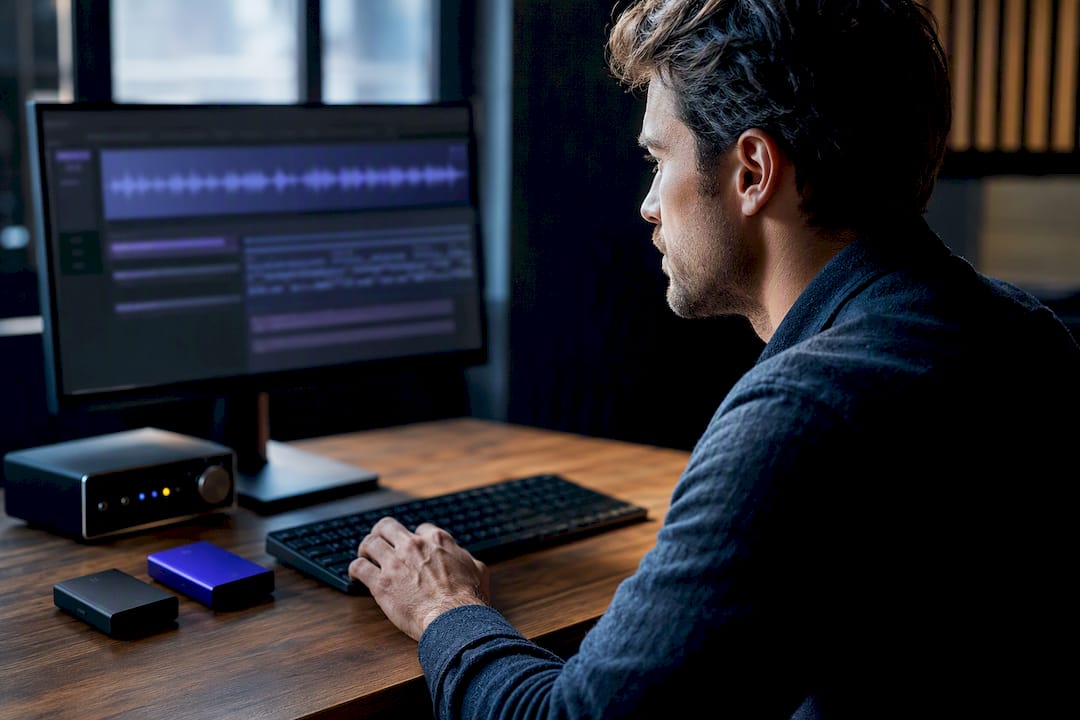
Yes, properly formatted and documented transcripts make effective training data for ASR, diarization, retrieval, and many fine-tuning tasks. The requirements are consistent audio and transcription conventions, normalized text, timestamps and speaker labels, and clear provenance and consent records. Before you collect a single file, define your target task, lock a transcription convention, and grab a small sample recording to test your pipeline end to end.
TL;DR:
- Using a JSONL file structure with detailed metadata, timestamps, and speaker labels is essential for scalable and auditable training data.
- Choosing between verbatim and intended transcriptions impacts model behavior by either capturing disfluencies or producing cleaner output, and consistency is crucial.
- Proper data cleaning includes removing boilerplate, fixing capitalization, normalizing tokens, and segmenting audio into task-appropriate chunks to improve model training.
- Thorough documentation covering collection, preprocessing, and quality metrics helps ensure dataset reliability and facilitates external review or audits.
- Running pilots with clear acceptance criteria allows early identification of formatting or annotation issues, saving significant effort in large-scale data collection.
Table of Contents
- How Do You Train AI With Transcripts Correctly?
- What Transcription Policy Should You Lock In First?
- How Do You Clean and Chunk Transcripts for Training?
- What Documentation Do Training Datasets Need?
- Can a Transcription Platform Pilot Speed This Up?
- What Actually Goes Wrong When Teams Build These Datasets?
- Get Platform Support for Transcript Collection and Export
- Where to Verify These Standards Yourself
- Sources
- FAQ
How Do You Train AI With Transcripts Correctly?
Training AI with transcripts starts with the files and metadata you keep, not the model you eventually build. Get this layer wrong and every downstream step (cleaning, annotation, evaluation) inherits the mess.
File layouts that actually scale. Plain text pairs still work for basic speech recognition jobs. Microsoft’s guidance for human-labeled transcriptions recommends one line per audio file name and its transcript in a .txt or .tsv file, which keeps ingestion simple for Custom Speech-style pipelines. But once you need diarization, retrieval, or fine-tuning metadata, a flat text file runs out of room fast. A JSONL structure with fields like file_id, start_s, end_s, speaker_id, text, confidence, and source_url gives you a record that’s both machine-readable and auditable months later when someone asks where a sentence came from.
Timestamps: word-level or segment-level? Segment-level timestamps (start and end of an utterance) are enough for most LLM fine-tuning and retrieval work. Word-level timestamps cost more to produce but pay off for ASR training, forced alignment, and any downstream captioning or dubbing task. A production dataset of roughly 10,500 hours of call-center conversations illustrates the pattern well: word-level timestamps, confidence scores, and domain tags all live in the same schema, which makes the dataset reusable across several model types instead of just one.
Speaker labels aren’t optional for multi-speaker audio. Generic tags like speaker_1 and speaker_2 work for basic diarization. Role tags (agent, customer, dispatcher) add real value when the downstream task cares about turn-taking behavior, not just who spoke. Skipping diarization entirely is fine only if every clip is genuinely single-speaker.
Beyond the transcript itself, hang onto the raw audio and its context:
- Original audio in WAV or LINEAR16, not a lossy re-encode, so you can re-transcribe later if standards change.
- Sample rate and channel count (mono vs. stereo) recorded per file, since mismatches silently degrade ASR accuracy.
- Environment notes (call center floor, quiet office, outdoor mic) because background noise is a feature, not just a nuisance, when you’re training for robustness.
Map metadata depth to the task. ASR fine-tuning needs audio, transcript, and basic speaker ID. Diarization training needs word-level timestamps and speaker boundaries. Retrieval-augmented generation needs clean chunk boundaries and source URLs more than it needs precise timing at all.
What Transcription Policy Should You Lock In First?
The single decision that changes model behavior more than any other is whether you transcribe verbatim or intended speech, and most teams make it by accident instead of on purpose.
Verbatim vs. intended transcripts. A verbatim transcript captures every “um,” repeated word, and false start exactly as spoken. An intended transcript cleans that up into the sentence the speaker meant to say. Verbatim data trains a model to reproduce natural disfluencies, which matters for conversational voice agents that need to sound human. Intended transcripts train cleaner, more confident output, which suits summarization or retrieval tasks where disfluencies are just noise. Mixing the two styles within one dataset is the fastest way to get an unstable model. Guidance on fine-tuning audio models points to word-error-rate gaps of roughly 12% between transcription styles on multi-speaker recordings, which is large enough to make a model second-guess itself on every filler word.
Normalization rules you need in writing, not in someone’s head:
- Decide casing once (sentence case is standard) and apply it everywhere, including proper nouns and acronyms.
- Spell out or standardize numbers (“twenty” vs. “20”) based on whether your task benefits from spoken-form or digit-form text.
- Keep contractions as spoken (“don’t,” not “do not”) unless your task specifically needs expanded forms.
- Handle strong language with a documented policy rather than ad hoc annotator judgment, and log where redactions occurred.
- Use bracketed tags for non-speech events (
[laughter],[crosstalk],[noise]) consistently across every annotator.
Your annotation schema should also capture confidence scores per segment and a diarization ID (DID) tied to a stable speaker profile across a file, not just within it. That way you can trace a labeling error back to a specific annotator’s segment, not just a vague “something’s off” feeling.
Pro Tip: Run a 50 clip pilot with two annotators before you scale up. Fixing a bad guideline after 500 hours of labeling is a very different bill than fixing it after 5.
Version your guideline document like code. When you change a rule, note the date and re-label a sample of older data so your dataset doesn’t silently contain two incompatible conventions.
How Do You Clean and Chunk Transcripts for Training?
Raw captions and call transcripts are rarely training-ready straight out of the box. They carry boilerplate, misheard tokens, and punctuation that autogenerated captioning tools guess at rather than get right.
A workable cleaning pipeline runs in this order:
- Strip boilerplate and sponsor segments with regex passes before anything else touches the text.
- Fix capitalization and restore sentence boundaries, since punctuation recovery is one of the highest-return steps for LLM fine-tuning derived from captions and changes output quality more than most teams expect.
- Correct known misheard tokens using a project-specific dictionary (brand names, technical jargon, product names your ASR system consistently botches).
- Normalize whitespace and remove duplicate lines introduced by auto-caption timing overlaps.
Chunking strategy depends entirely on the target task. ASR training generally wants shorter utterance-level segments, often a few seconds to under a minute. LLM fine-tuning tends to work well with snippets in the range of roughly 100 to 150 tokens, giving the model enough context without diluting the signal across too many topics. Retrieval-augmented generation wants chunks aligned to semantic boundaries (a full answer, a complete thought) rather than a fixed token count, with modest overlap between chunks so context doesn’t get severed mid-idea. Pipelines built around YouTube transcript exports commonly use timestamped JSON with chunk-level metadata as the default output format, which keeps provenance attached to every snippet.
Deduplication matters more than most teams budget for. Near-duplicate segments (the same disclaimer read at the top of every episode, the same hold-music script) inflate your dataset’s apparent size without adding signal, and they can bias a model toward memorizing boilerplate. A simple similarity threshold catches most of these before they reach your training set.

For splitting, hold out a validation and test partition that reflects your real-world mix of speakers, accents, and recording conditions, not just a random slice of whatever you collected first. Google Cloud’s guidance on preparing data for custom speech models recommends keeping validation audio in a separate directory with its own file pairing, which forces the discipline of a genuinely held-out set rather than a partition that leaked into training by accident.
Tooling ranges from open-source command-line pipelines like hearsay, which emits word-timestamped transcripts with JSON sidecar metadata, to scripted Whisper-based workflows, to vendor exports that hand you a cleaned dataset directly. Pick based on how much control you need over the intermediate steps versus how fast you need a usable dataset.
What Documentation Do Training Datasets Need?
A transcript dataset without documentation is a liability the moment someone outside your team needs to trust it, whether that’s a procurement officer, a regulator, or your own engineer six months from now.
NIST’s dataset documentation guidance recommends a datasheet covering identifying descriptors, intended use, composition, collection method, preprocessing steps, and known limitations. Public-facing documentation can be lighter than your internal version, but it still needs to record how data was collected and cleaned, since that’s exactly what a reviewer will ask about first.
| Documentation area | What to record |
|---|---|
| Identity | Dataset name, version, creation date, owning team |
| Intended use | Target task (ASR, diarization, RAG, fine-tuning), known unsuitable uses |
| Collection | Source type, consent status, recording conditions |
| Preprocessing | Normalization rules applied, chunking strategy, dedup method |
| Consent and lineage | Contributor IDs, consent timestamps, scope of use, deletion procedure |
| Quality | Inter-annotator agreement, WER or DER breakdown, representativeness notes |
PII redaction deserves its own QA pass, separate from general cleaning. A simple two-step check works: run automated redaction for names, phone numbers, and account details, then have a human spot-check a random sample of redacted files to confirm nothing slipped through. Log every redaction decision with a timestamp and the rule that triggered it, so you can prove your process later rather than just asserting it worked.
Report quality metrics honestly rather than optimistically. Inter-annotator agreement, word error rate (WER) for transcription accuracy, diarization error rate (DER) for speaker attribution, and a representativeness summary across accents, speaker demographics, and recording conditions all belong in the same document. This is the exact material a procurement review or a regulator will ask for first, and having it ready before they ask is far cheaper than assembling it under pressure.
Can a Transcription Platform Pilot Speed This Up?
Running a short pilot before committing to a full dataset build catches formatting mismatches early, when they’re cheap to fix. A real-time call transcription pilot should hand you sample exports in TXT, TSV, and JSON, a QA report on accuracy, and a starter datasheet you can extend.
When evaluating any vendor’s pilot deliverables, ask directly for:
- Consent logs showing what contributors agreed to and when.
- Inter-annotator agreement figures on a labeled sample, not just an accuracy claim.
- Preprocessing logs documenting exactly which normalization rules ran.
Features like live analytics dashboards and industry-specific templates map directly onto dataset tasks: dashboards surface volume and accuracy trends over the pilot window, while templates give you a starting schema instead of building one from scratch. Set acceptance criteria before the pilot starts (a target WER, a minimum agreement score) so success isn’t a matter of opinion afterward.
What Actually Goes Wrong When Teams Build These Datasets?
Most transcript dataset failures trace back to a handful of repeatable mistakes, not exotic edge cases.
Mixed transcription policies top the list: one annotator working verbatim, another cleaning up disfluencies, and nobody noticing until the model’s output sounds inconsistent. Circular labeling comes next, where annotators unconsciously label based on what they expect a model to want rather than what the audio actually contains. Insufficient provenance and thin QA coverage round out the pattern.
The cost curve here is unusual. The first 10 hours of well-annotated, well-documented data often teach a model more than the next 100 hours of rushed, inconsistent data. Spend your early budget on annotation QA and representative sampling, not raw volume. Lock your conventions before hour one, not hour fifty, and check inter-annotator agreement continuously rather than as a one-time gate at the start.
— Alex
Get Platform Support for Transcript Collection and Export
Monobot gives teams that don’t want to stitch together five separate tools a single place to capture real-time transcripts, enforce a consistent annotation policy, and export training-ready formats without manual reformatting.
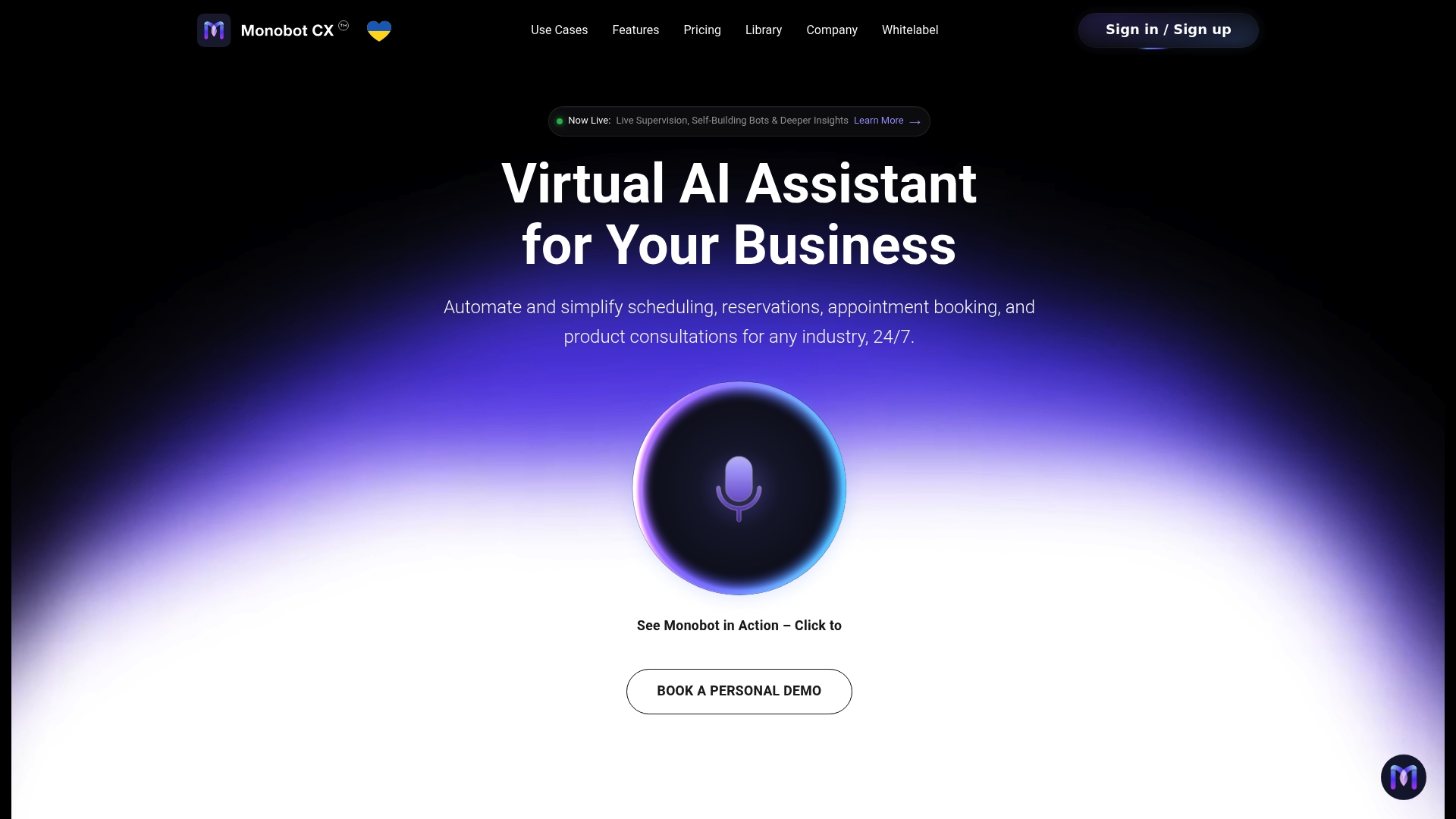
If you’re a customer service manager or IT operations lead evaluating how to source clean transcript data at scale, Monobot’s live transcription feature captures conversations from voice and chat agents in real time, while the dashboard analytics surface volume and quality trends across your interaction history. Ready-to-Use Templates in the template library give you a starting schema for healthcare, banking, retail, and other verticals instead of building one from scratch. Plans start with the Starter tier at $200 per month, scaling to Growth at $500 and Business at $1,000, with full pricing details here. Teams evaluating white-label deployment can also review the OEM and white-label options. Request a pilot to see sample exports before committing to a full build.
Where to Verify These Standards Yourself
- NIST’s dataset documentation guidance for the datasheet standard referenced throughout this piece.
- Microsoft’s Custom Speech transcription guide for file format and normalization rules.
- Google Cloud’s data prep guide for directory layout and validation split practices.
- Guidance on humanizing AI text for shaping cleaned transcripts into instruction-response pairs.
Sources
- NIST AI: Dataset documentation guidance (NIST.AI.300-1)
- Microsoft: Human-labeled transcriptions guidance for Custom Speech
- Google Cloud: Prepare data for custom speech models
- Kili Technology: Fine-tuning audio models guide
FAQ
Will Transcriptionists Be Replaced by AI?
AI handles first-pass transcription well, but human review still matters for policy decisions like verbatim versus intended style, disfluency handling, and quality assurance. Most production pipelines today combine automated transcription with human annotators checking accuracy and enforcing consistency, rather than removing people entirely.
What Is the Best Training to Learn AI Dataset Preparation?
There’s no single certification that covers this end to end, but Microsoft’s Custom Speech documentation and Google Cloud’s data preparation guide are the two most practical starting points for hands-on format and normalization rules. Pairing either with a small pilot project, run through a platform like Monobot’s transcription pilot, teaches the workflow faster than reading alone.
Is Transcript AI Free to Use for Training Data?
Some open-source tools for generating and cleaning transcripts, like Whisper-based pipelines, are free to run yourself, though you still pay in compute time and cleanup effort. Vendor platforms and managed pilots typically carry a subscription cost. Monobot’s plans start at $200 per month for the Starter tier, with pricing details available on the pricing page.
Can You Make $1,000 a Month Transcribing for AI Training Data?
Freelance transcription and annotation work can generate meaningful income, though earnings vary widely based on volume, accuracy requirements, and whether the work is per-hour or per-audio-minute. Annotation quality tends to matter more than raw speed for teams building training datasets, since a fast but inconsistent transcriptionist creates more cleanup work than they save.