



Training an AI agent well means combining a structured, hands-on course with continuous evaluation: model testing, red teaming, and real user feedback. Start with one multi-module learning path from Microsoft, Google, or Coursera, then build a simple retrieval or task agent within the first two weeks. The rest comes from iteration, not more reading.
TL;DR:
- Building a reliable AI agent requires early integration of evaluation, red teaming, and user testing to identify small, often overlooked failures.
- Continuous testing and guardrails should inform tool design and prompts from the very beginning rather than being added afterward.
- Starting with structured, hands-on courses and building a simple retrieval or task agent within two weeks accelerates deployment and learning.
- Using ready-to-use templates and no-code builders can speed up development, especially for teams or individuals focusing on quick deployment over extensive training.
- A disciplined testing habit and small, consistent evaluation efforts are more crucial than pushing for advanced fine-tuning early in the development process.
Table of Contents
- Core components every AI-agent training course must teach
- Recommended structured courses and learning paths
- A practical 6-10 week curriculum to train and iterate your first AI agent
- How to evaluate and measure agent quality
- Publisher perspective: how templates and analytics shorten the learning curve
- What the roadmap gets right, and what it overrates
- Move from training to a working agent faster
- Sources
- FAQ
Core components every AI-agent training course must teach
A good agent training course teaches architecture first: the model that reasons, the tools it calls, the memory it retains across turns, and the orchestration loop that ties those pieces into a working system. Skip one of these and the agent breaks in ways that are hard to diagnose later.
Training methods matter just as much as architecture; for practical guidance on using AI assistants in agencies, explore our detailed AI Assistants for Agencies Explained resource. Prompt engineering shapes how the model interprets instructions, retrieval-augmented generation (RAG) grounds answers in real data, supervised fine-tuning adjusts behavior on labeled examples, and reinforcement learning helps agents improve at multistep tasks over time. OpenAI’s practical guide to building AI agents recommends pairing a capable manager model with specialized tools and structured instructions, plus guardrails for privacy and security at every layer.
The strongest courses teach these ideas as modular, hands-on lessons rather than long lectures:
- Model and reasoning basics: how the agent decides what to do next.
- Tool integration: connecting APIs, databases, and external functions.
- Memory and context: keeping track of state across a conversation or task.
- Guardrails: sandboxing, input filtering, and limits on what tools an agent can execute.
Recommended structured courses and learning paths
Four learning paths stand out for combining real curriculum depth with labs you actually build in.
- Microsoft’s Develop AI agents on Azure runs through several modules covering agent fundamentals, tool integration, RAG, and deployment, pairing each concept with runnable code. A companion series, AI Agents for Beginners, breaks the same territory into a 10-lesson format for newer learners. Expect one to two weeks of steady study if you work through the labs rather than skim them. Best for learners who want cloud deployment practice from day one.
- Google Skills’ Gen AI Agents path gives hands-on practice building a basic agent while introducing models, reasoning loops, and tool use as distinct building blocks. It reads less like a developer bootcamp and more like an operational primer, which makes it a strong fit for managers and teams planning organizational rollout rather than solo coding.
- Coursera’s AI Agent Developer specialization combines Python, prompt engineering, and hands-on projects into a multi-course track. It leans more academic in structure, with graded projects, and suits learners who want a language and tooling foundation alongside agent concepts.
- NVIDIA’s Build an Agent workshop, distributed through GitHub workshop materials, goes deepest on RAG, evaluation frameworks, synthetic data generation, and harness architecture. It assumes more technical comfort and rewards learners who want GPU-accelerated tooling and a closer look at how agents are actually tested.
Each path signals its credibility differently: Microsoft and Coursera through module count and structured certification, NVIDIA through workshop depth, Google through its focus on practical, org-ready skills. Picking one depends less on prestige and more on whether you want cloud fluency, tooling fluency, or evaluation fluency first.
A practical 6-10 week curriculum to train and iterate your first AI agent
Courses give you concepts. A week-by-week plan turns them into a working agent.
- Weeks 1-2: fundamentals. Cover model basics and prompt engineering, then wire up one or two simple tool integrations. Build a retrieval assistant that answers questions from a small document set.
- Weeks 3-4: tools and memory. Add RAG, persistent memory, and multi-turn orchestration. Build an agent that remembers earlier turns in a conversation and calls a tool mid-task without losing context.
- Weeks 5-6: evaluation and safety. Run model tests, write red-team prompts that try to break the agent, and get a handful of real users to try it. Document every failure mode you find, even minor ones.
- Weeks 7-10 (optional, advanced): fine-tuning or reinforcement learning. Improve your training harness, tighten evaluation, and set up continuous measurement so you catch regressions as the agent evolves. The EvoTrainer research describes co-evolving model policies and training harnesses together, a useful reference once you are past the basics and working on long-horizon tasks.
Pro Tip: Keep an experiment log and a small test suite from week one. Every time you change a prompt, add a tool, or retrain, rerun the suite so you catch regressions instead of discovering them in production.
How to evaluate and measure agent quality
Evaluation is not a final exam, it is a habit you build into every stage of training. The NIST Generative AI Profile recommends treating evaluation as a continuous “Measure” function, combining model testing, red teaming, and user testing as complementary sources of evidence rather than picking just one.
Track a short list of practical checks throughout training:
- Helpfulness and accuracy: does the agent actually solve the task it was given?
- Hallucination frequency: how often does it state something ungrounded as fact?
- Safety refusals: does it decline appropriately when it should?
- Latency and tool correctness: does it call the right tool, quickly enough to be usable?
NIST’s guidance frames evaluation as an ongoing, risk-proportional process that blends model testing, red teaming, and user testing rather than a one-time gate before launch. A light red-team pass before every deploy, paired with a recurring user-testing cadence, catches more real problems than a single pre-launch audit ever will. For a closer look at building that kind of test suite, Monobot’s regression testing playbook walks through measuring chat and agent behavior over time.
Publisher perspective: how templates and analytics shorten the learning curve
Once you have built a working prototype in a course or workshop, the gap to a live, reliable agent is usually tooling, not talent. Ready-to-use templates and no-code builders let learners skip repetitive setup and put their lab work in front of real interactions faster. Real-time analytics and agent-assist features then close the loop, showing exactly where an agent stumbles so the next training pass targets the right fix.
The fastest learners are not the ones who finish the most courses. They are the ones who get a rough agent in front of real conversations early and let that feedback drive what they study next.
What the roadmap gets right, and what it overrates
The multi-module course plus continuous evaluation model works because it matches how agents actually fail: not in one dramatic way, but in dozens of small edge cases that only show up once real users start talking to them. Courses from Microsoft, Google, and Coursera are good at teaching the mechanics. Where conventional advice falls short is in treating evaluation as an afterthought, something you bolt on after the “real” training is done.

That gets the order backward. A red-team pass in week five should already be informing your prompt and tool design, not just grading it. Fine-tuning and reinforcement learning, the parts most beginners rush toward, matter far less early on than a disciplined testing habit. Most agent failures trace back to weak tool integration or missing guardrails, not an undertrained model.
If you take one thing from this roadmap, prioritize building a small, boring test suite before you touch anything advanced. It will teach you more about your agent’s real behavior than another module ever will.
— Alex
Move from training to a working agent faster
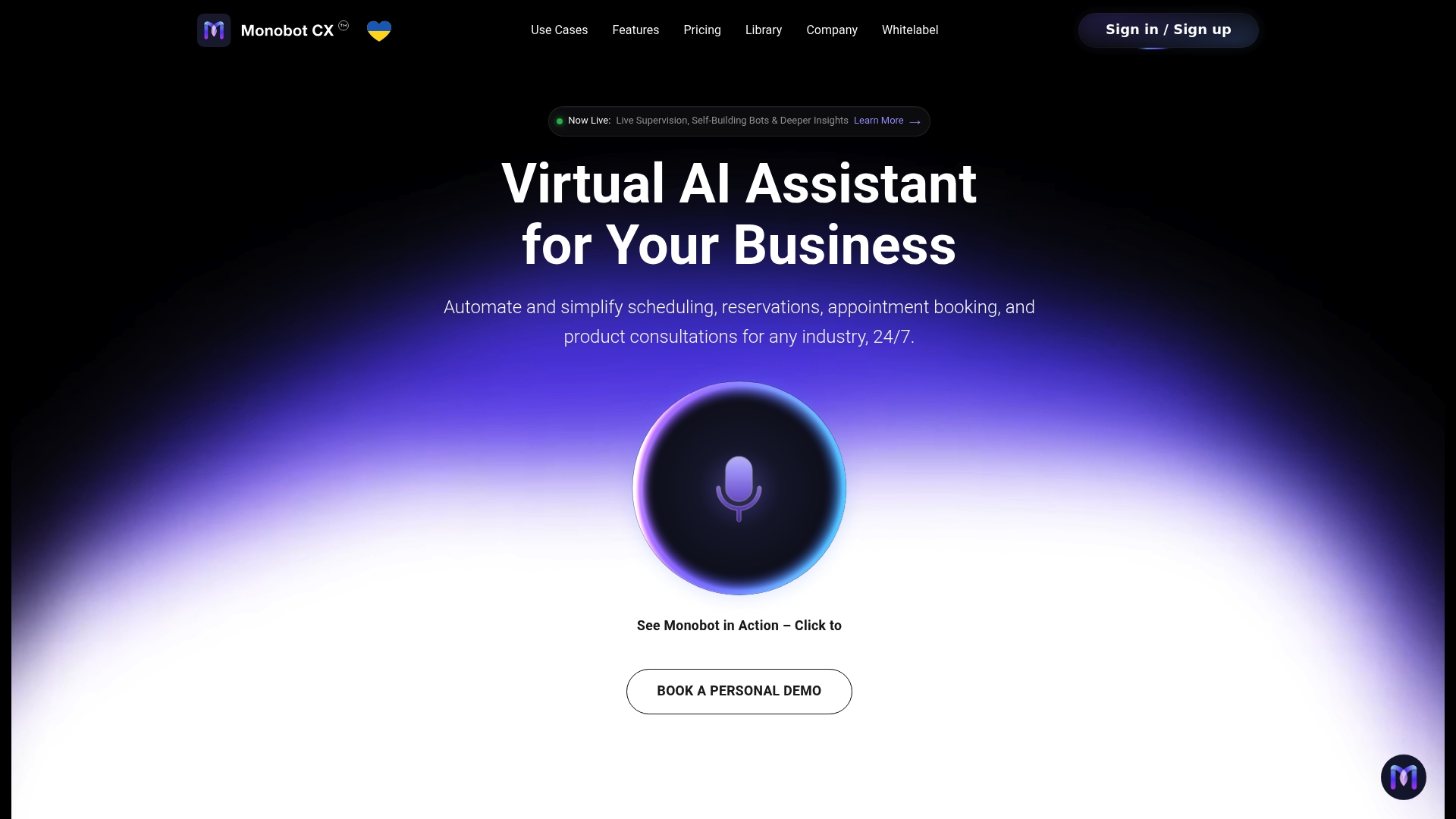
Learning the fundamentals is one path. Skipping the rebuild-from-scratch phase is another, and it is the one Monobot exists for. Instead of assembling architecture, tools, and guardrails by hand, teams and individual builders who want a working voice or chat agent quickly can start from ready-to-use templates built for industries like healthcare, banking, retail, and logistics, then customize without writing code.
This suits three kinds of learners especially well:
- Teams who finished a course and now need production deployment, not another lab exercise.
- Individual builders who want a specific industry template rather than a generic starting point.
- Anyone prioritizing speed, since Monobot’s no-code builder and real-time analytics shorten the path from prototype to live agent considerably.
Check the pricing page to see current pricing and plans that fit your needs, or explore the agent builder to see how templates translate coursework into a deployable assistant.
Sources
- Develop AI agents on Azure — Microsoft Learn
- A practical guide to building AI agents — OpenAI
- Artificial Intelligence Risk Management Framework: Generative Artificial Intelligence Profile — NIST
- EvoTrainer: Co-Evolving LLM Policies and Training Harnesses for Autonomous Agentic Reinforcement Learning — arXiv
- AI Agent Developer Specialization — Coursera
FAQ
How can I learn to make AI agents?
Start with a structured, hands-on course such as Microsoft’s Develop AI agents on Azure or the Coursera AI Agent Developer specialization, then build a small retrieval or task agent to apply what you learn immediately. Pairing lessons with a real build cuts the gap between knowing concepts and being able to ship one.
How do I train my AI agent?
Training combines prompt engineering, tool integration, and iterative evaluation rather than a single step. Add memory and orchestration once the basics work, then follow guidance like NIST’s TEVV approach recommending continuous evaluation combining model testing, red teaming, and user testing to catch failures before wider deployment.
How do I become certified in AI agent development?
There is no single universal certification for AI agent development, but structured paths like the Coursera AI Agent Developer specialization and Microsoft’s learning paths offer completion credentials that demonstrate hands-on skill. Definitions of “certified” vary by employer, so check what a specific role or organization actually requires.
What are the main types of AI agents?
Common categories include reactive agents that respond to input without memory, model-based agents that track state, goal-based agents that plan toward an objective, utility-based agents that weigh outcomes, and learning agents that improve through feedback over time. Most modern conversational and task agents blend several of these behaviors rather than fitting neatly into one type.
How long does it take to train a basic AI agent?
A focused learner can build a working prototype in the first two weeks of a structured course, with a more capable, tested agent taking six to ten weeks when evaluation and iteration are included. The 6-10 week curriculum above outlines what each stage covers.