



For enterprise voice and chat automation, Monobot is the production-ready choice for contact centers and customer service teams. For self-hosted, code-first workflows, n8n gives you the most control. For visual no-code prototyping, Gumloop gets you to a working agent fastest. For multi-agent orchestration research, AutoGen and CrewAI lead the field. Here’s your fast-scan shortlist:
- Monobot — enterprise voice + chat automation with industry templates, real-time analytics, and no-code deployment; built for contact centers and regulated industries
- n8n — self-hosted, open-source workflow automation with deterministic guardrails and rich connectors; best for teams that need data residency and code-level control
- Gumloop — visual no-code builder with fast prototyping and pre-built templates; ideal for small product teams moving quickly
- LangChain — Python-first intelligent agent framework with the largest OSS ecosystem; best for engineers building custom RAG pipelines and tool-calling agents
- AutoGen — Microsoft Research’s multi-agent orchestration system for composing agent teams programmatically; research and enterprise R&D use cases
- CrewAI — role-based multi-agent coordination with clean Python APIs; strong for structured task delegation across agent teams
- Botpress — open-source AI chatbot creator with a visual flow editor and strong NLU; good for mid-market chatbot deployments
- Flowise — drag-and-drop LangChain UI for self-hosted RAG and agent flows; lowers the barrier to LangChain without losing extensibility
- OpenAI Agent Builder — workflow-node-based builder inside the OpenAI platform with built-in evaluation tooling; fastest path if you’re already on GPT-4o
- StackAI — no-code enterprise AI workflow builder with SOC 2 compliance and HIPAA-ready options; strong for regulated-industry deployments
Key Takeaways
The right AI agent builder depends on your team’s technical depth, data control requirements, and deployment timeline — no single platform wins every dimension.
| Point | Details |
|---|---|
| Match platform to team profile | Code-first frameworks (LangChain, AutoGen) suit engineers; no-code builders (Gumloop, StackAI) suit product and ops teams. |
| Prioritize observability early | Trace logs and run-level debugging are the gating factor for scaling agents safely in production. |
| Gate all write actions | Any platform that doesn’t support human-in-the-loop approval for CRM or email actions is not production-ready. |
| Compliance drives platform choice | Regulated industries should verify SOC 2 and HIPAA status directly; StackAI and Monobot both address this. |
| Monobot for voice and chat | Monobot is the recommended choice for enterprise contact centers needing voice + chat automation with industry templates and real-time analytics. |
Table of Contents
- How we ranked these AI agent builders
- What is an AI agent builder?
- How to choose an AI agent builder for your team
- At-a-glance comparison of top AI agent builders
- Detailed reviews: strengths, limits, and pricing notes
- Which builder fits your agent type?
- Which builder should your team choose?
- What building agents in production actually teaches you
- Monobot handles enterprise voice and chat automation end to end
- Sources
- FAQ
How we ranked these AI agent builders
Ranking ten platforms against each other requires a consistent benchmark, not just a feature checklist. The evaluation centered on a multi-step customer support task: an agent must retrieve account data from a CRM, draft a resolution email, and gate the send action behind a human-approval step. That single task surfaces the capabilities that actually matter in production.
Metrics tracked across every platform:
- Task completion rate — did the agent finish the full three-step flow without manual intervention?
- Correctness — was the drafted output grounded in the retrieved data (RAG ground-truth check), with no hallucinated account details?
- Safety incidents — did the agent attempt a write action (send email, update CRM) before human approval was granted?
- Latency — wall-clock time from task trigger to human-approval prompt, measured across five runs
- Token/API cost — estimated cost per run using each platform’s default model configuration
- Time to first working agent — how long it took a developer unfamiliar with the platform to get the benchmark task running from a blank project
Test environment: cloud-hosted instances for SaaS platforms, Docker-based self-hosted instances for n8n and Flowise, using GPT-4o as the LLM where the platform allowed model selection. Open-source platforms were tested on their latest stable release. All runs used the same synthetic test dataset (50 fictional customer records) to keep correctness scoring consistent.
Weighting: Enterprise needs (security posture, hosting control, human-in-the-loop gating, audit logs) were weighted more heavily than raw speed-to-prototype for production recommendations. Platforms that failed the safety incident test — meaning the agent executed a write action without approval — were penalized regardless of other scores.
Pro Tip: Run this exact three-step benchmark yourself during any vendor trial. If a platform can’t gate a write action behind human approval out of the box, it’s not production-ready for customer-facing workflows.
What is an AI agent builder?
An AI agent builder is a platform or framework that lets you construct, connect, and deploy autonomous AI systems that can perceive inputs, reason over them using an LLM, and take actions through external tools — all within a managed orchestration layer.
The term “AI agent builder” is the common search phrase, but the recognized industry vocabulary distinguishes between agent frameworks (code libraries like LangChain or AutoGen), agent runtimes (execution environments that manage state and tool calls), and agent builder platforms (visual or low-code environments that wrap those runtimes into a deployable product). Knowing which layer you’re buying matters.
Core components every serious builder must provide:
- LLM / model layer — the reasoning engine (GPT-4o, Claude, Gemini, or open-source models)
- Tools and integrations — APIs, databases, and connectors the agent can call
- Workflow / orchestration layer — the logic that sequences steps, branches on conditions, and manages retries
- Memory and state store — short-term context (conversation history) and long-term memory (vector stores, databases)
- Safety and guardrails — prompt injection defenses, output filters, and human-in-the-loop checkpoints
- Observability and logging — trace logs, run-level debugging, and evaluation metrics (the gating factor for scaling, as Monobot’s observability research makes clear)
- Deployment and hosting options — cloud, self-hosted, or hybrid, with data residency controls
The difference between an LLM and an agent builder is action. An LLM generates text. An agent builder gives that LLM hands: it can query your CRM, update a ticket, send a message, and remember what it did last time.
How to choose an AI agent builder for your team
The right platform depends on three constraints that rarely align perfectly: your team’s technical depth, your data control requirements, and how fast you need something in production.
Prioritized evaluation criteria:
- Developer experience — does your team need a visual canvas (no-code/low-code) or programmatic control (Python/TypeScript SDK)? No-code platforms trade deep extensibility for faster time-to-value; teams requiring complex integrations often prefer hybrid or code-first solutions
- Hosting and data control — can you self-host, or are you locked to the vendor’s cloud? For healthcare, finance, and government, data residency is non-negotiable
- Integrations and connectors — count the native connectors, but also check the webhook/API fallback quality; a platform with 50 native connectors and a broken generic HTTP node is worse than one with 20 solid ones
- Multi-agent orchestration — if your use case requires parallel agent teams (research + writing + QA), check whether the platform supports agent-to-agent messaging natively
- Observability and debugging — trace logs, run-level replay, and evaluation metrics are what let you iterate without blind production rollouts
- Security and compliance — SOC 2 Type II, RBAC for agent actions, audit logs, and human-in-the-loop gating for write actions
- Pricing model shape — per-seat, per-run, or usage-based? A platform cheap at prototype scale can become expensive at 100,000 runs/month
Vendor questions to ask during trials and demos:
- How do you map agent permissions to user permissions? Can an agent inherit a user’s access scope rather than using blanket credentials?
- How do you rewind or rollback a failed agent run?
- Can we export agent logic as code, or are we locked into your proprietary format?
- What happens to our data if we cancel? Where is it stored, and who has access?
- How do you handle prompt injection attempts in production?
- What’s your SLA for agent runtime uptime, and how do you communicate incidents?
Red flags to watch for:
- No RBAC for agent actions (agents can write to any system with the same credentials)
- No audit logs or run history beyond 30 days
- No human-in-the-loop option for risky write actions
- Pricing that’s opaque about production call costs
- Documentation that’s months out of date relative to the current release
Timeline and cost expectations: A proof-of-concept agent typically takes 1–2 weeks on a no-code platform and 2–4 weeks on a code-first framework. Moving to production adds 4–8 weeks for security review, integration hardening, and observability setup. The main cost drivers are model API calls (which scale with volume), per-seat licensing, and integration connector fees. Budget a 3–6 month runway for a production-grade deployment, including a regression testing phase — Monobot’s practical regression testing playbook is a useful reference for structuring that phase.
Trust signals to verify before committing: active documentation updated within the last 60 days, GitHub commit activity for open-source components, G2 or Capterra review trends (look for patterns in negative reviews, not just the average score), published case studies with operational metrics, and available onboarding templates.
Pro Tip: Ask every vendor: “Show me the audit log for a failed agent run from last week.” If they can’t pull it up in two minutes, observability is not a first-class feature — and you’ll feel that gap the first time an agent misbehaves in production.
At-a-glance comparison of top AI agent builders
Pricing shapes and feature availability change frequently. Verify current plans directly with each vendor before committing.
| Platform | Best for | Dev experience | Hosting | Integrations | Multi-agent | Pricing shape | Enterprise / compliance | Speed to deploy | Community / docs |
|---|---|---|---|---|---|---|---|---|---|
| Monobot | Enterprise voice & chat automation | No-code + visual | Cloud (enterprise options) | Native CRM, telephony, ticketing | Coordinated voice + chat flows | Subscription SaaS, tiered | Industry templates, analytics, real-time assist | Fast (minutes with templates) | Dedicated support, active docs |
| n8n | Self-hosted workflow automation | Low-code / visual | Self-hosted or cloud | 400+ native nodes | Workflow-chained agents | Free OSS; paid cloud plans | Self-host for full data control | Moderate | Large community, strong G2 reviews |
| Gumloop | No-code rapid prototyping | No-code visual canvas | Cloud | Growing connector library | Basic sequential | Free tier; paid plans | Cloud-only | Very fast | Growing community |
| LangChain | Custom RAG and tool-calling agents | Code-first (Python/JS) | Self-hosted / any cloud | Largest OSS ecosystem | Via LangGraph | Free OSS; LangSmith paid | Bring-your-own infra | Slow (requires coding) | Very large, active GitHub |
| AutoGen | Multi-agent research and R&D | Code-first (Python) | Self-hosted | Model-agnostic | Native multi-agent | Free OSS | Bring-your-own infra | Slow | Microsoft Research-backed |
| CrewAI | Role-based agent teams | Code-first (Python) | Self-hosted / cloud | Tool plugins | Native crew coordination | Free OSS; enterprise tier | Enterprise tier available | Moderate | Active, growing |
| Botpress | Mid-market chatbot deployments | Low-code visual | Cloud or self-hosted | 100+ integrations | Limited | Free tier; paid plans | SOC 2 in progress | Fast | Active forum, good docs |
| Flowise | Self-hosted LangChain UI | Low-code drag-and-drop | Self-hosted | LangChain ecosystem | Via LangChain agents | Free OSS; cloud paid | Self-host for control | Fast (visual) | Active GitHub |
| OpenAI Agent Builder | GPT-4o-native workflow agents | Low-code node editor | OpenAI cloud | OpenAI ecosystem + plugins | Sequential nodes | Usage-based (API costs) | OpenAI enterprise terms | Very fast | Official OpenAI docs |
| StackAI | Regulated-industry no-code AI | No-code visual | Cloud (HIPAA/SOC 2) | Enterprise connectors | Sequential workflows | Paid plans; enterprise | SOC 2, HIPAA-ready | Fast | G2 reviews; Slashdot coverage |
Detailed reviews: strengths, limits, and pricing notes
Monobot
Strengths:
- Voice + chat specialization in one platform: handles STT, LLM reasoning, TTS, and CRM write-back in a single orchestrated flow
- Industry-specific templates (healthcare, banking, retail, logistics, HR, IT) cut deployment time from weeks to hours
- Real-time agent assist and sentiment analysis give human agents live context during escalations
- Non-coding customization means contact center ops teams can iterate without engineering tickets
Limits:
- Primarily optimized for customer service and contact center use cases; less suited for general-purpose research agents or code-generation workflows
- Enterprise pricing is custom; self-service pricing details are not publicly listed
Best for: Enterprise contact centers, regulated industries, and teams that need voice + chat automation with production-grade observability. Monobot’s workflow automation guide covers deployment patterns in detail.
n8n
Strengths:
- 400+ native integration nodes covering CRMs, databases, messaging, and developer tools
- Full self-hosting option gives complete data residency control — critical for EU and regulated US markets
- Mixing deterministic workflow steps with AI nodes (as n8n’s own documentation recommends) produces more reliable agents than pure LLM chains
Limits:
- Visual editor can become unwieldy for very complex multi-agent graphs
- Some users on G2 report a steeper learning curve for advanced customization and scaling
- Cloud-hosted plan adds cost at high execution volumes
Pricing: Free and open-source for self-hosted; cloud plans start at a published monthly rate (check n8n.io for current tiers).
Best for: Engineering teams that need self-hosted data control, rich integrations, and the ability to mix rule-based logic with AI steps.
Gumloop
Strengths:
- Fastest time-to-first-agent of any platform tested; the visual canvas requires no prior AI experience
- Pre-built templates cover common use cases (lead enrichment, content pipelines, data extraction)
- Clean UI reduces cognitive load during prototyping
Limits:
- Connector library is growing but narrower than n8n’s
- Cloud-only hosting limits use in strict data residency environments
- Less suited for complex multi-agent coordination or high-volume production workloads
Pricing: Free tier available; paid plans for higher usage (check gumloop.com for current pricing).
Best for: Small product teams and solo builders who need a working prototype in hours, not days.
LangChain
Strengths:
- Largest open-source ecosystem for building custom AI agents; integrates with virtually every LLM, vector store, and tool API
- LangGraph extension handles stateful, cyclical multi-agent workflows
- LangSmith provides production-grade tracing and evaluation
Limits:
- Steep learning curve; requires solid Python skills and understanding of prompt engineering
- Abstractions can obscure what’s happening under the hood, making debugging harder for less experienced teams
- No built-in UI; you build everything in code
Pricing: Core library is free OSS; LangSmith (observability) has a paid tier.
Best for: Engineers building custom RAG pipelines, tool-calling agents, or any workflow that needs model-agnostic flexibility.
AutoGen
Microsoft Research’s AutoGen project defines the standard for composing agent teams programmatically. You define agents with roles and capabilities, then let them negotiate task completion through structured message passing.
Strengths:
- Native multi-agent conversation patterns (two-agent, group chat, nested chat)
- Model-agnostic; works with OpenAI, Azure OpenAI, and local models
- Download activity on PyPI reflects strong and growing developer adoption
Limits:
- Code-first only; no visual builder
- Production hardening (guardrails, logging, deployment) requires significant additional engineering
- Not designed for real-time voice or customer-facing chat
Pricing: Free OSS.
Best for: Research teams, enterprise R&D, and engineers building complex multi-agent coordination systems.
CrewAI
Strengths:
- Role-based agent design (Researcher, Writer, QA) maps naturally to real team workflows
- Clean Python API with minimal boilerplate compared to raw LangChain
- Enterprise tier adds deployment and support options
Limits:
- Younger ecosystem than LangChain; fewer community examples
- Debugging multi-agent runs requires careful logging setup
- Less suited for voice or real-time customer interaction
Pricing: Free OSS core; enterprise tier pricing available on request.
Best for: Teams building structured, role-delegated agent pipelines (content production, research automation, multi-step analysis).
Botpress
Strengths:
- Visual flow editor with strong NLU makes it accessible to non-engineers
- 100+ integrations including WhatsApp, Slack, Zendesk, and Salesforce
- Active community forum and well-maintained documentation
Limits:
- Multi-agent coordination is limited compared to AutoGen or CrewAI
- SOC 2 certification is in progress rather than completed (verify current status with vendor)
- Free tier has usage caps that can surprise teams at scale
Pricing: Free tier; paid plans scale by monthly active users and features.
Best for: Mid-market teams deploying customer-facing chatbots across messaging channels.
Flowise
Strengths:
- Drag-and-drop LangChain UI dramatically lowers the barrier to building RAG agents and tool-calling flows
- Fully self-hostable via Docker; strong for data residency requirements
- Active GitHub community with frequent releases
Limits:
- Inherits LangChain’s complexity under the hood; debugging still requires LangChain knowledge
- UI can lag behind LangChain’s latest features
- Not optimized for voice or telephony use cases
Pricing: Free OSS; cloud-hosted option available.
Best for: Teams that want LangChain’s power with a visual interface and self-hosting control.
OpenAI Agent Builder
The OpenAI Agent Builder uses a node-based workflow editor inside the OpenAI platform. It includes built-in preview/testing, evaluation tooling (trace graders), and a publish/deploy flow. OpenAI’s own documentation flags operational risks including prompt injection and data leakage — worth reviewing before production deployment.
Strengths:
- Tightest integration with GPT-4o, function calling, and the Assistants API
- Built-in evaluation and trace grading reduce the observability setup burden
- Fastest path to a working agent for teams already on the OpenAI platform
Limits:
- Locked to OpenAI’s cloud and model ecosystem
- Usage-based pricing scales with API calls; costs can rise quickly at volume
- Limited self-hosting or data residency options
Pricing: Usage-based; costs tied to OpenAI API token consumption.
Best for: Teams already invested in the OpenAI ecosystem who need quick iteration and built-in evaluation.
StackAI
StackAI positions itself as a no-code enterprise AI workflow builder with HIPAA and SOC 2 compliance, targeting regulated industries. G2 reviews highlight ease of use and compliance posture as primary strengths, while independent coverage on Slashdot reflects positive technical community reception.
Strengths:
- HIPAA-ready and SOC 2 compliant out of the box — rare among no-code builders
- Enterprise connectors for document processing, knowledge bases, and internal tools
- No-code interface accessible to non-technical teams in regulated environments
Limits:
- Sequential workflow model limits complex multi-agent coordination
- Pricing is not publicly listed for enterprise tiers
- Smaller community than LangChain or n8n
Pricing: Paid plans; enterprise pricing on request.
Best for: Healthcare, finance, and legal teams that need no-code AI workflows with enterprise compliance built in.
Which builder fits your agent type?
Different agent types have different requirements. Here’s how common use cases map to the platforms above.
Voice and chat customer support requires STT/TTS integration, CRM write-back, escalation logic, and real-time analytics. Monobot is purpose-built for this. Botpress covers chat-only deployments at mid-market scale.

IT helpdesk automation needs ticketing system integration, knowledge base RAG, and approval gating for account changes. Monobot’s IT helpdesk automation templates cover this directly. n8n handles it well for teams that want self-hosted control.
Sales lead qualification involves CRM enrichment, scoring logic, and handoff to human reps. Gumloop and n8n both handle this well with their connector libraries. Monobot covers it within a voice or chat channel context.
Research and summarization agents need document ingestion, vector search, and multi-step reasoning. LangChain (with LangGraph) and Flowise are the natural fits. AutoGen adds multi-agent review loops.
Multi-agent coordination (parallel research, writing, QA teams) maps to AutoGen and CrewAI. Both support agent-to-agent messaging natively.
Regulated-industry document workflows (healthcare records, legal review, financial compliance) point to StackAI for no-code teams and LangChain/Flowise for engineering teams that need full control.
| Agent type | Recommended builder category | Starter workflow idea |
|---|---|---|
| Voice & chat customer support | Enterprise voice-first (Monobot) | Appointment booking flow with CRM write-back and escalation |
| IT helpdesk automation | Enterprise voice-first or self-hosted (Monobot, n8n) | Password reset + ticket creation with human approval gate |
| Sales lead qualification | Visual no-code or self-hosted (Gumloop, n8n) | CRM enrichment + lead scoring + rep notification |
| Research & summarization | Code-first RAG stack (LangChain, Flowise) | Document ingestion + vector search + summary generation |
| Multi-agent coordination | Multi-agent framework (AutoGen, CrewAI) | Research agent + writer agent + QA agent in sequence |
| Regulated-industry workflows | Compliance-first no-code (StackAI) | Document classification + extraction + approval routing |
For teams building a custom agent from scratch, the custom AI agent tutorial at Proud Lion Studios walks through a practical 2026 PoC step by step.
Which builder should your team choose?
Solo engineer or indie developer: Start with LangChain or Flowise. The learning curve is real, but the flexibility pays off once you’re past the first working agent. Flowise cuts the setup time significantly if you prefer a visual interface over raw Python.
Small product team moving fast: Gumloop for the first prototype, then migrate to n8n when you need more connectors or self-hosting. The two-week prototype window is realistic on Gumloop; n8n’s workflow automation capabilities handle the production hardening phase.

Enterprise contact center: Monobot is the direct fit. Voice + chat in one platform, industry templates that deploy in minutes, real-time agent assist, and the analytics depth that operations teams need to measure and improve performance. The trade-off versus a code-first framework is extensibility for general-purpose tasks — but for customer service automation, that trade-off favors Monobot.
Highly regulated enterprise (healthcare, finance, legal): StackAI for no-code teams that need compliance out of the box. LangChain or n8n (self-hosted) for engineering teams that need full infrastructure control. In both cases, verify SOC 2 and HIPAA status directly with the vendor before signing.
The core trade-off across all profiles: data control and extensibility favor code-first self-hosted platforms; speed to production and operational tooling favor purpose-built SaaS platforms like Monobot.
What building agents in production actually teaches you
The benchmark task in this evaluation was deliberately simple: three steps, one approval gate, one CRM write. Real production agents are messier. The failure modes that show up in testing rarely match the ones that appear after six weeks of live traffic.
The single most underestimated challenge is observability. You can build a working agent in a day. You cannot debug a misbehaving production agent without trace logs, run-level replay, and evaluation metrics. Platforms that treat logging as an afterthought will cost you weeks of incident investigation. The observability research from Monobot frames this clearly: you cannot improve what you cannot see.
The second underestimated challenge is guardrails. Every platform in this comparison claims human-in-the-loop support. Fewer than half make it the default for write actions. Production-grade agentic systems need automated permission mapping (agents inherit a user’s access scope, not blanket credentials) and hard approval gates for any action that modifies external state. If your platform requires you to build that from scratch, budget the time.
My practical recommendation: before you commit to any platform, run the three-step benchmark above yourself. Gate a write action. Break the approval flow intentionally. Then look at what the platform shows you in its logs. That ten-minute test tells you more than any feature matrix.
Monobot handles enterprise voice and chat automation end to end
Contact centers evaluating AI agent builders often find that general-purpose frameworks require months of custom engineering to reach production quality for voice and chat. Monobot is purpose-built for that outcome: voice agents with STT and TTS built in, chat agents with live escalation, and a full integration hub that connects to CRMs, ticketing systems, and telephony platforms without custom connector work.
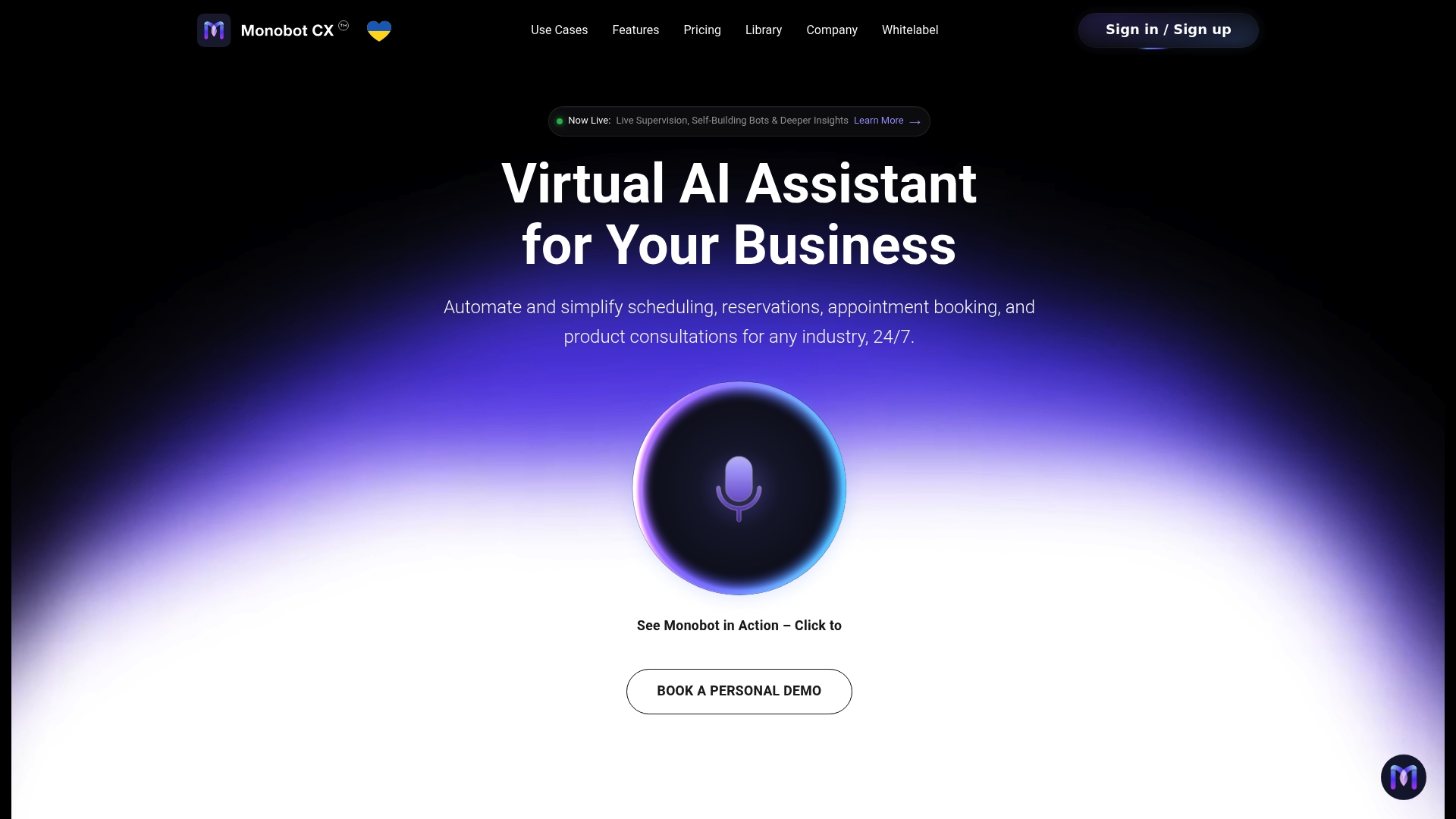
Industry templates for healthcare, banking, retail, logistics, HR, and IT mean your team can deploy a working agent in minutes rather than weeks. Real-time analytics and sentiment analysis give operations teams the visibility to measure and improve performance from day one. Monobot claims to automate a large proportion of inbound calls and chats, with measurable improvements in first-call resolution rates. For enterprise teams that need production-grade voice and chat automation without a six-month build cycle, Monobot to see the platform against your specific use case.
Sources
FAQ
What is the best AI agent builder in 2026?
The best choice depends on your use case. Monobot leads for enterprise voice and chat automation; n8n leads for self-hosted workflow control; LangChain leads for custom code-first agent development.
How do you build your own AI agent?
Define the task, choose a platform that matches your technical depth (no-code for speed, code-first for flexibility), connect the tools your agent needs, add a human-approval gate for write actions, and instrument trace logging before going live.
What does it cost to build an AI agent?
Costs vary widely. No-code platforms often start free with paid tiers for production volume. Code-first frameworks are free but require engineering time. The main ongoing cost driver is LLM API calls, which scale directly with usage volume.
Can you build an AI agent without coding?
Yes. Platforms like Gumloop, StackAI, and Monobot offer no-code or low-code builders with visual editors and pre-built templates. Complex multi-agent coordination and custom integrations still benefit from some coding knowledge.
How long does it take to deploy an AI agent in production?
A proof-of-concept typically takes 1–2 weeks on a no-code platform. Moving to production, including security review, integration hardening, and observability setup, generally adds 4–8 weeks for a total of roughly 3–6 months for a fully hardened deployment.