



If you need fast rollout, low operational overhead and built-in voice and chat features, a managed cloud product usually fits best. If you need full control, on-premise data residency and deep customization, an open-source self-hosted framework is the better bet. The tradeoff comes down to ease and speed on one side, control and ownership on the other.
TL;DR:
- If policy bars utterances from leaving your network or region, self hosting becomes a requirement; otherwise, review cloud retention and residency terms.
- Self hosting requires Python, DevOps, and machine learning skills on staff, plus responsibility for model deployment, rollbacks, capacity planning, and ongoing monitoring.
- Set pilot targets for containment, intent accuracy, and fallback rate before testing, then compare two options using the same high value use case.
- Validate timelines locally: hosted proof of concepts may take days to a few weeks, while self hosting adds setup before the first conversation runs.
Table of Contents
- How do managed cloud products and self-hosted frameworks really differ?
- What should you check before choosing a chatbot framework?
- Where and how will your chatbot run in production?
- How much engineering does customization take?
- Which integrations will you need, and what ecosystem signals matter?
- What should you verify for voice and multimodal bots?
- What security and data control questions belong in procurement?
- How long does a bot take to build, and who do you need?
- How do you model total cost and spot hidden licensing costs?
- What decision flow can you run in a few steps?
- Where do teams go wrong with speed-first choices?
- Why do we recommend a managed platform for fast, production-ready bots?
- FAQ
- Sources
How do managed cloud products and self-hosted frameworks really differ?
The choice behind a dialogflow vs rasa decision is architectural before it is a feature question. One side is a hosted product with a web interface. The other is a code-first library you install, train and run yourself. A Stack Overflow comparison puts it plainly: Dialogflow is a closed-source, hosted product, while the Rasa NLU and core combination needs installation, code-based training data and self-hosting, but allows on-premise operation and data ownership.

Managed cloud platforms bundle hosted NLU, graphical editors and prebuilt connectors. Microsoft’s Azure Bot Services documentation describes this model well: hosting, channel integrations and scaling are abstracted away so your team builds conversations instead of infrastructure. You trade some flexibility for speed.
Open-source frameworks give you the NLU and dialogue libraries as code. You decide how models are trained, where they run and how dialogue policies behave. That freedom is why many teams searching for dialogflow alternatives end up evaluating a self-hosted route.
An academic preprint comparing Rasa and Dialogflow analyzes architectural differences and notes tradeoffs in dialogue management and deployment approaches. A technical comparison on Compsmag summarizes the same split: open-source flexibility and data control on one side, ease of use, Google ecosystem integrations and faster rollout on the other.
Data flow is where the two diverge most:
- Cloud API calls: user utterances travel to a vendor endpoint for NLU processing, so you review the vendor’s retention and residency terms.
- Self-hosted pipelines: utterances stay inside your network, and you own the training data, logs and model artifacts.
- Lifecycle: managed platforms version and scale the NLU for you, while self-hosting makes retraining, rollbacks and capacity planning your job.
- Where each excels: managed products win on time to first working bot, and frameworks win on bespoke behavior and strict governance.
What should you check before choosing a chatbot framework?
Work through these in order. Hard constraints eliminate options early, so they come first.
- Compliance and data residency. Can utterances leave your network or region? If not, the decision is mostly made.
- Latency targets. Define the response time your channel needs, then test each option against it with realistic payloads.
- Team skills. Do you have Python, DevOps and ML experience in-house? A code-first framework without them stalls quickly.
- Time to production versus maintenance. A hosted product ships sooner. A framework costs more upfront but may cost less to bend later.
- Integration and scale. List the channels, CRMs and internal systems you must connect, plus peak concurrent conversations.
- Pilot success metrics. Agree on containment rate, intent accuracy and fallback rate before you start, and judge the pilot against those numbers, not impressions.
Pro Tip: Write your three hardest constraints on one page before you open any vendor site or repository, and reject options against that page, not against feature lists.
Where and how will your chatbot run in production?
Hosting is where the real workload hides. A managed platform removes servers from your plate, yet you still own conversation design, connector credentials, release discipline and alerting on business metrics.
Self-hosting shifts much more onto your team:
- Infrastructure: container orchestration, networking, secrets management and capacity for peak load.
- Model serving: deploying NLU models, warming them, and versioning them so rollbacks are painless.
- CI/CD: automated tests for intents and dialogue flows, so a training-data change cannot silently break a conversation.
- Hybrid and enterprise-hosted options: some vendors run dedicated or private deployments, which can satisfy residency rules without you operating every layer.
Whichever model you pick, build a monitoring checklist from day one:
- Intent confidence distributions and fallback rate
- Conversation completion and handoff-to-human rate
- Latency per component (NLU, actions, channel)
- Error rates on custom actions and external API calls
- Transcript sampling for quality review
How much engineering does customization take?
Estimate extensibility by asking how far the target behavior sits from the default. Simple FAQ and routing flows barely touch code. Multi-step flows with business logic touch it constantly.
- Custom NLU pipelines: self-hosted frameworks let you plug in spaCy components, transformer models or custom embeddings. Hosted NLU generally offers tuning, not replacement.
- Dialogue management: rule-based flows suit predictable processes. Learned policies need training stories and careful evaluation. A Rasa community thread shows how story and flow authoring differs from GUI-driven platforms.
- Custom actions and middleware: every serious bot calls backend systems. Check whether you write those as SDK code, webhooks or visual blocks.
- Editor versus code-first: visual editors let product owners edit flows, while code-first setups give engineers diffs, reviews and tests.
Pro Tip: Prototype your single hardest conversation first. If it takes days in one option and weeks in another, you have learned more than any feature table could tell you.
Good training data matters in both worlds, and our chatbot training data playbook covers the hygiene steps that save rework.
Which integrations will you need, and what ecosystem signals matter?
Integration effort is the most underestimated line in project plans. List every system the bot must reach, then check what exists out of the box.
- Channels: web chat, messaging apps and telephony are usually prebuilt on hosted platforms and assembled by you in frameworks.
- Enterprise systems: CRM, ticketing and ERP connectors are where custom work piles up. Our guide to CRM integrations for chatbots maps the common patterns.
- Middleware: when several bots and systems must talk, an orchestration layer keeps business logic out of individual bots.
- SDKs, APIs and webhooks: the Microsoft Bot Framework site is a good example of an SDK-centered, integration-first model.
- Ecosystem maturity: look at plugin availability, release cadence, documentation quality and open-source repository activity.
What should you verify for voice and multimodal bots?
Voice exposes problems that text hides. Test these before you commit:
- Speech stack: does the platform include ASR and TTS, or must you wire in external services and manage their latency?
- Real-time constraints: streaming recognition and barge-in handling decide whether a call feels natural or robotic.
- Session state: a customer who starts in chat and continues by phone needs one shared context, not two.
- Testing: run calls with accents, background noise and interruptions, and review recordings with the people who own the experience.
For observability on calls, see how voice analytics fits into an evaluation.
What security and data control questions belong in procurement?
Put these on the architecture review agenda:
- Residency and ownership: where is data stored and processed, and who owns transcripts, training data and derived models?
- Encryption and access: encryption in transit and at rest, role-based access and single sign-on support.
- Audit logging: who changed a flow, who read a transcript, and can you export those logs?
- Retention and PII: set retention windows, mask sensitive fields before storage and define deletion procedures.
- Governance triggers: when internal policy forbids sending utterances to a third party, self-hosting stops being a preference and becomes a requirement.
How long does a bot take to build, and who do you need?
Timelines vary with scope, so treat these as planning ranges to validate, not benchmarks. A hosted platform can often reach a narrow proof of concept in days to a few weeks. A self-hosted framework typically needs more time for environment setup, data preparation and pipeline work before the first conversation runs.
- Staffing mix: an ML or NLU engineer, a DevOps engineer, a backend developer for integrations and a product owner who owns conversation quality.
- Maintenance cadence: weekly transcript review, regular retraining or prompt updates, dependency upgrades and quarterly flow audits.
- Common slippage causes: late integration access, vague success metrics, thin training data and security reviews that start after the build.
Pro Tip: Book the security review and the integration credentials early. Waiting on either is the most common reason pilots slip.
How do you model total cost and spot hidden licensing costs?
Compare shapes, not sticker prices. Subscriptions scale with usage, seats or interactions. Self-hosting swaps those fees for infrastructure, engineering time and on-call burden.
- Subscription metrics: per-interaction, per-seat and per-channel charges, plus any voice minutes.
- Self-hosting costs: compute, storage, GPU needs if you serve large models, and the salaries of the people who run it.
- License and support: open-source licenses cost nothing to download, but enterprise support contracts and hosted editions do not.
- Hidden costs: telemetry tooling, enterprise connectors, security audits and retraining cycles.
- Pilot worksheet: list volume assumptions, per-unit fees, infrastructure, staff hours and support, then rerun it with higher volume assumptions.
What decision flow can you run in a few steps?
- Define constraints and must-haves. Compliance, latency, channels and budget, written down and ranked.
- Map constraints to capability buckets. Hosting model, customization depth, voice, integrations and security.
- Run a narrow proof of concept. One high-value use case, two options, fixed success metrics such as containment, accuracy and handoff rate.
- Compare results against the checklist. Weigh pilot data and staffing realities, not demos.
- Plan the rollout. Pick the winner, define monitoring and set a review date to revisit the choice.
Where do teams go wrong with speed-first choices?
In my view, speed-first choices pay off when the use case is well understood and the data rules are clear. They create debt when a team ships quickly, then discovers a residency rule or a custom behavior the platform cannot reach. Teams also underestimate integration and telemetry: the model is rarely the hard part, connecting it to messy backend systems and measuring real outcomes is. And governance usually has the last word. Many technical debates end the day legal reviews the data flow diagram.
— Alex
Why do we recommend a managed platform for fast, production-ready bots?
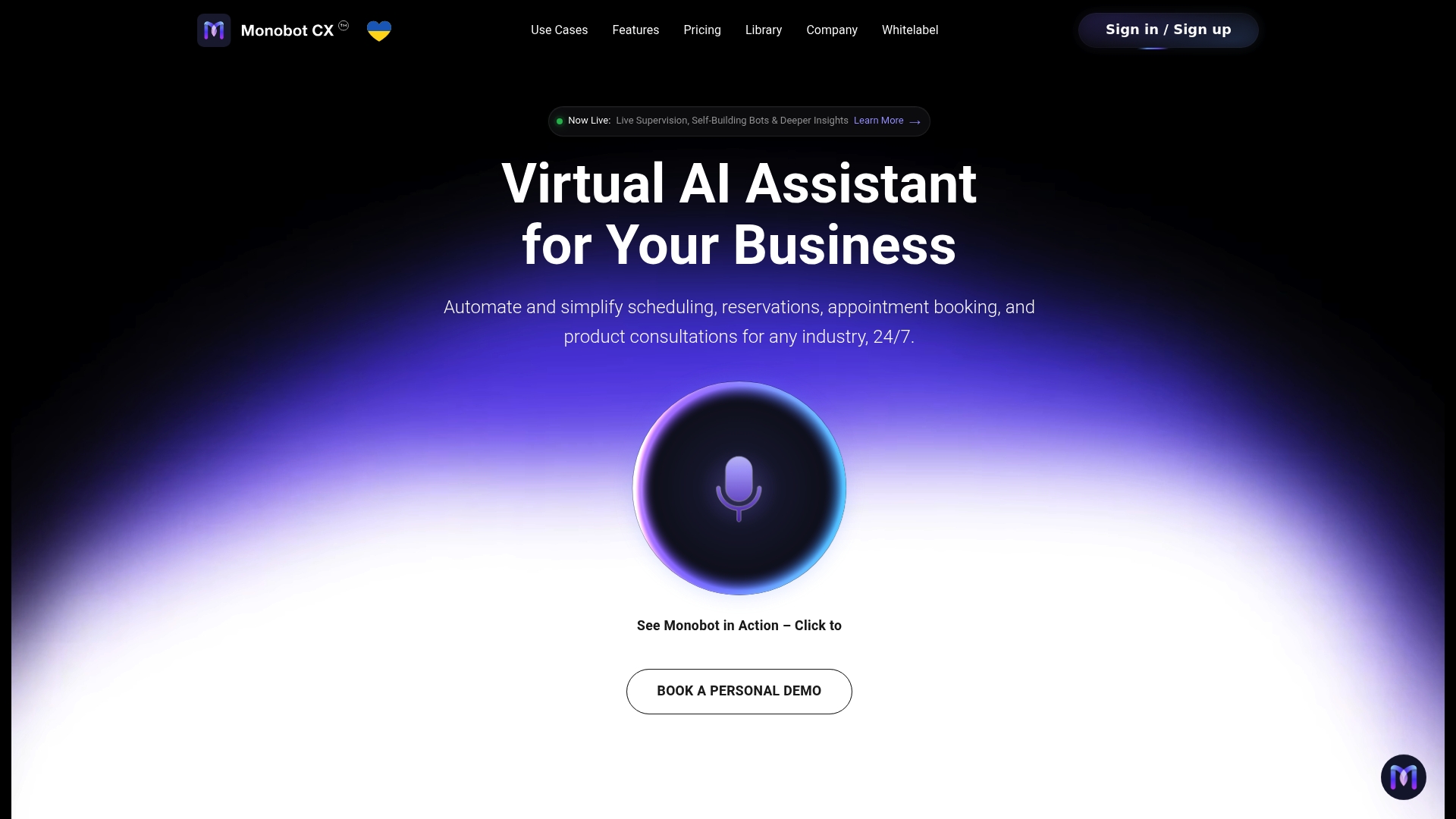
If your checklist points toward the managed path, we built our platform for exactly that route. We help you launch voice and chat agents without code, often within minutes, and we back them with ready-to-use templates, integrations and real-time analytics. Teams automating support and contact center work reach value sooner because the plumbing is already in place. Our dashboard analytics show you what your agents handle and where humans should step in.
- No-code deployment for voice and chat agents
- Ready-to-use templates for common industries
- Built-in analytics and real-time agent assistance
- Integrations with the tools your team already runs
See our pricing, request a demo or start from a template today.
FAQ
What are the key differences between Dialogflow ES and Dialogflow CX?
Dialogflow ES is the simpler edition suited to straightforward intent-based bots, while CX targets larger, more complex multi-turn flows with a more structured design model. Check Google’s official documentation for the current feature set before you decide.
Is Rasa free to use?
The open-source framework is free to download and self-host, as the Compsmag comparison notes when it highlights open-source flexibility. You still pay for infrastructure, engineering time and any enterprise support you choose.
Which conversational AI is best?
No single option wins for every team. Managed platforms suit fast rollout with low operations, and open-source frameworks suit strict control and deep customization. Run a narrow pilot against your own constraints to decide.
What are some alternatives to Botpress?
Common routes include other open-source frameworks, hosted cloud bot services and no-code platforms. Compare them with the same checklist: hard constraints, team skills, integrations and total cost.