



TL;DR:
- Businesses should select CRM integration methods based on their size, technical skills, and automation needs. No-code widgets are quick and suitable for simple tasks, while API integrations provide full control for complex workflows. Proper security measures, like backend proxies, are essential to protect sensitive customer data during integration.
The three primary types of CRM integrations for chatbots are no-code widget embeds, API-based custom integrations, and platform-specific plugins. Each method delivers a different level of control, setup speed, and automation depth. Businesses that choose the wrong integration type often pay for it in wasted developer hours, limited personalization, or security gaps. Understanding which approach fits your size, technical capacity, and customer engagement goals is the fastest way to get real value from a chatbot deployment.

1. What are the main types of CRM integrations for chatbots?
CRM chatbot integration refers to connecting a conversational AI agent directly to your customer relationship management system so the bot can read, write, and act on customer data. The industry uses three recognized methods: no-code widget integrations, API-based custom integrations, and platform-specific plugins. Each sits at a different point on the spectrum between speed and control.
No-code widgets are the fastest to deploy. API integrations give you the deepest access to CRM data and workflows. Plugins sit in the middle, using pre-built connectors for platforms like WordPress or Shopify. Knowing which category fits your business prevents costly rebuilds six months down the road.
2. No-code widget integrations: the fastest path to deployment
No-code widget integrations work by embedding a pre-built chatbot script directly into your website or CRM portal. You paste a code snippet, configure settings through a visual dashboard, and the bot goes live. Setup takes 5–15 minutes, making this the go-to method for teams without dedicated developers.
These widgets typically handle:
- FAQ automation — answering common questions without agent involvement
- Lead capture — collecting names, emails, and phone numbers into CRM fields
- Appointment scheduling — syncing with calendar tools to book meetings
- Basic CRM sync — pushing conversation data to contact records automatically
The tradeoff is flexibility. No-code widgets manage API keys internally, which reduces developer cost but limits how deeply you can customize data flows or trigger complex CRM workflows. You also give up granular control over security configurations, since the vendor manages the authentication layer.
No-code widgets suit small businesses, early-stage startups, and teams running a pilot before committing to a full API build. They are not the right fit for businesses that need to update CRM records in real time, run transactional workflows, or enforce strict data governance policies.
Pro Tip: When evaluating no-code widget options, prioritize those that offer native CRM sync rather than just form-based data capture. Native sync writes directly to contact records, saving your team hours of manual data entry each week.
3. How API-based custom CRM chatbot integrations work
API-based integration is the method that turns a chatbot from a FAQ responder into a transactional business tool. Deep integrations shift chatbots from answering questions to executing business transactions and updating CRM records in real time. That distinction matters enormously for businesses running high call volumes or complex customer workflows.
The technical process follows these steps:
- Authenticate — generate API keys or OAuth tokens from your CRM provider (Salesforce, Zendesk, or similar)
- Build a backend proxy — route all chatbot requests through a server-side layer, never through frontend code
- Define endpoints — map the CRM actions your bot needs: read contact data, create tickets, update order status
- Handle errors and rate limits — build retry logic and circuit breakers to prevent failures from cascading
- Test in staging — validate every CRM action before pushing to production
Popular REST API targets for chatbot integrations include Salesforce, Twilio, Stripe, Google Calendar, and Zendesk. Each expands what your chatbot can do, from processing payments to updating support tickets without human intervention.
Implementation time runs 2–4 hours or more depending on CRM complexity and the number of endpoints you need. You need at least one developer comfortable with REST APIs and JSON. The payoff is full control over data flows, personalization logic, and automation triggers.
Security is the biggest risk in API integrations. Improperly configured authentication was the primary vulnerability in over 70% of chatbot security audits connecting to CRM data. That number reflects how often teams skip proper key management in the rush to ship.
Poor API integration practices cost businesses an average of $47,000 annually due to wasted API calls, downtime, and security incidents. Treating security as an afterthought is genuinely expensive.
Pro Tip: Never expose API keys in frontend code. Always route requests through a backend proxy layer. This single practice eliminates the most common attack vector in chatbot-to-CRM connections and keeps your audit logs clean.
4. What are platform-specific plugins for CRM chatbot integration?
Platform-specific plugins are pre-built connectors designed for popular content management and ecommerce systems. Think of a chatbot plugin for WordPress that connects to HubSpot, or a Shopify app that syncs chat conversations to your CRM automatically. These plugins live inside your existing platform’s app marketplace and install in minutes.
Key characteristics of plugin-based integrations:
- Setup time runs 5–15 minutes, similar to no-code widgets
- Customization is broader than widgets but narrower than full API builds
- Maintenance depends on the plugin vendor keeping pace with CRM API updates
- Cost is typically subscription-based, adding a recurring line item to your tech stack
Plugins work well for ecommerce businesses that need chatbots to pull order history from a CRM and surface it during a chat session. They also suit content-heavy sites where the CRM tracks subscriber behavior and the chatbot needs to personalize responses based on that data.
The main limitation is vendor dependency. If the plugin vendor stops updating their connector after a CRM platform releases a major API version, your integration breaks. Always check the plugin’s update history and support responsiveness before committing. A conversational search audit can also reveal whether your chatbot’s data connections are performing as expected after a plugin update.
5. How integration types compare in features, costs, and scalability
Choosing between integration methods comes down to four factors: setup speed, technical skill required, customization depth, and security control. The table below maps each integration type against those factors.
| Factor | No-code widget | Platform plugin | API-based custom |
|---|---|---|---|
| Setup time | 5–15 minutes | 5–15 minutes | 2–4+ hours |
| Technical skill | None required | Low (platform admin) | Developer required |
| Customization | Low | Moderate | High |
| Security control | Vendor-managed | Vendor-managed | Full control |
| CRM data depth | Surface-level | Moderate | Full read/write |
| Scalability | Limited | Moderate | High |
| Typical cost | Low | Subscription | Development investment |
No-code widgets and plugins share similar setup times but differ in where they live. Widgets are platform-agnostic. Plugins are tied to a specific system like Shopify or WordPress. API integrations require the most upfront investment but deliver the only path to real transactional automation.
Standardizing all outbound API requests through a central gateway maintains security policies, rate limiting, and error handling uniformly. This architecture practice separates production-grade integrations from fragile one-off builds.
6. Which CRM chatbot integration type should your business choose?
The right integration type depends on your business size, technical team, and the depth of automation you need. Here is a direct framework:
- Small businesses and startups — start with a no-code widget. Get the bot live, collect data on what customers ask, and use that evidence to justify a deeper build later.
- Mid-market businesses — evaluate plugins first if you run on WordPress, Shopify, or a similar platform. If your CRM workflows are complex, move directly to API integration.
- Enterprise teams — API-based integration is the only method that meets the security, scalability, and personalization requirements of high-volume customer operations. Monobot’s AI agent builder supports this level of integration without requiring teams to build everything from scratch.
Security should drive the final decision as much as functionality does. A chatbot connected to a CRM holds sensitive customer data. That data needs proper authentication, encrypted transit, and audit logging regardless of which integration method you choose.
Future-proofing also matters. Build your integration with modular architecture so you can swap CRM providers or add new data sources without rebuilding the entire bot. AI API integrations power 92% of production AI applications as of 2026, which signals that API-first thinking is now the industry standard, not a premium option.
A circuit breaker pattern prevents API rate limits and network failures from taking your chatbot offline during peak hours. Build it in from day one rather than retrofitting it after your first outage.
Key takeaways
The most effective CRM chatbot integration strategy matches your technical capacity to the depth of automation your customer workflows actually require.
| Point | Details |
|---|---|
| No-code widgets deploy fastest | Setup runs 5–15 minutes, ideal for teams without developers or for running a quick pilot. |
| API integrations unlock full automation | Only API-based methods allow real-time CRM record updates and transactional workflows. |
| Security is non-negotiable | Over 70% of chatbot security audits found authentication failures as the top vulnerability. |
| Plugins balance speed and depth | Platform-specific plugins suit ecommerce and CMS environments needing moderate CRM sync. |
| Architecture choices compound over time | Modular, API-first builds are easier to scale and cheaper to maintain as your CRM needs grow. |
What I’ve learned from watching businesses pick the wrong integration first
Most businesses pick a no-code widget because it’s fast, then rebuild with an API six months later because the widget can’t do what they actually need. That rebuild costs more than starting with the API would have. The smarter move is to spend two weeks mapping your CRM workflows before you touch any integration tool. Know exactly which data your chatbot needs to read and write. That map tells you which integration type you need before you commit.
The security piece is where I see the most avoidable damage. Teams expose API keys in frontend JavaScript, skip backend proxies, and then wonder why their CRM data shows up in places it shouldn’t. The fix is not complicated. A backend proxy layer handles it. The problem is that no-code tools make it easy to skip that step entirely, and most teams don’t realize the risk until something goes wrong.
The other pattern worth noting: businesses that integrate chatbots with their CRM for smarter customer support consistently report better first-contact resolution rates than those running standalone bots. The CRM data is what makes the difference. A bot that knows a customer’s order history, support ticket status, and account tier gives a fundamentally better answer than one that only knows what the customer typed in the last 30 seconds.
My honest advice: treat the integration layer as seriously as you treat the bot itself. The conversational design gets all the attention, but the integration is what determines whether the bot actually does anything useful.
— Alex
Monobot’s AI agent builder for CRM chatbot integrations
Monobot gives your team a direct path from concept to deployed CRM chatbot without months of custom development.
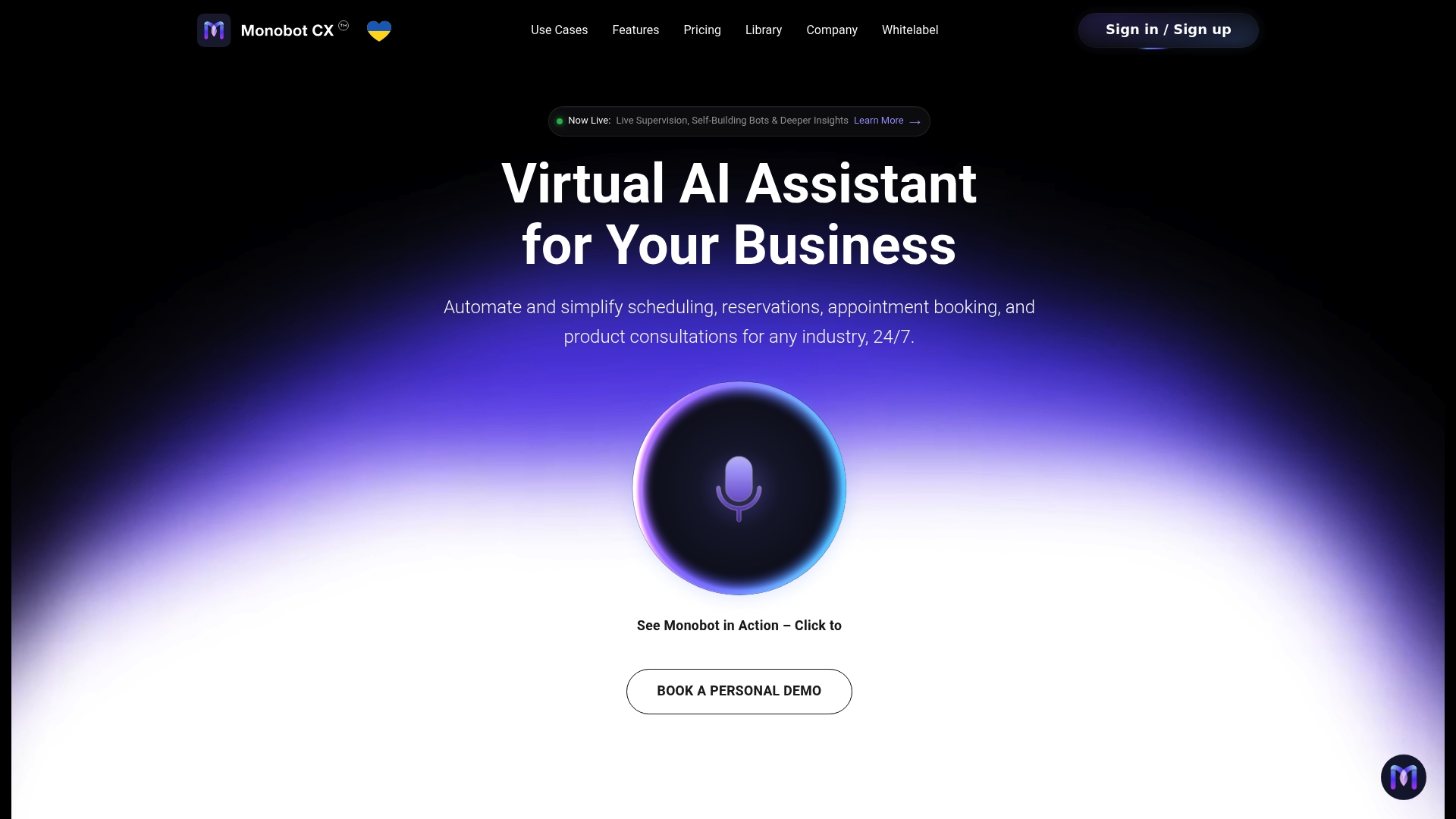
The Monobot AI Agent Builder supports no-code widget deployment, API-based custom integrations, and plugin-style connectors across industries including healthcare, retail, banking, and logistics. You can connect your CRM, configure automation triggers, and go live in minutes for simple use cases, or build full transactional workflows for enterprise environments. Monobot also includes real-time analytics and reporting so you can monitor chatbot performance, track CRM data accuracy, and identify gaps in your automation coverage. If you are ready to move beyond basic FAQ bots and build a chatbot that actually works inside your CRM, Monobot is built for exactly that.
FAQ
What are the three main types of CRM chatbot integrations?
The three main types are no-code widget integrations, API-based custom integrations, and platform-specific plugins. Each offers a different balance of setup speed, customization depth, and security control.
How long does it take to integrate a chatbot with a CRM?
No-code widgets and plugins deploy in 5–15 minutes. API-based custom integrations require 2–4 hours or more depending on the number of CRM endpoints and workflow complexity.
What is the biggest security risk in CRM chatbot integrations?
Improperly configured authentication is the top vulnerability, appearing in over 70% of chatbot security audits. Using a backend proxy to manage API keys eliminates the most common attack vector.
When should a business use API integration instead of a no-code widget?
Use API integration when your chatbot needs to update CRM records in real time, trigger transactional workflows, or handle personalized interactions based on live customer data. No-code widgets are sufficient for FAQ automation and basic lead capture.
What is a backend proxy and why does it matter for chatbot security?
A backend proxy is a server-side layer that handles all requests between your chatbot and your CRM or AI provider APIs. It prevents API keys from being exposed in frontend code, which is the most common source of data breaches in chatbot deployments.