


The TCPA (Telephone Consumer Protection Act) applies to AI voicebots that place outbound calls. Since a February 2024 FCC ruling, an AI-generated voice counts as an “artificial voice” under the law. Most outbound voicebot calls to consumers therefore need prior express consent, and marketing calls need prior express written consent. The rest comes down to three things you can build into the bot: a clear identity statement at the start, a working opt-out, and a consent record you can produce years later. This guide walks through each one, including the opt-out changes that take effect on November 25, 2026.
TL;DR
- AI-generated voices fall under the TCPA’s “artificial or prerecorded voice” rules, so outbound voicebot calls need the called party’s prior express consent, per the FCC’s February 2024 ruling.
- Marketing or advertising calls need prior express written consent. Informational calls to wireless numbers can rely on oral or written consent.
- Every call must open with your registered business name and give a callback number. Telemarketing calls also need an automated opt-out.
- Revocation rules change on November 25, 2026: you can designate exclusive opt-out methods if you disclose them clearly.
- Keep consent and call records for five years. TCPA damages run $500 per call, or $1,500 if willful or knowing.
Table of Contents
- Which voicebot calls the TCPA covers
- Which consent you need: a matrix by call type
- What the voicebot must say on every call
- Opt-outs and do-not-call: the November 25, 2026 change
- Records: what a TCPA defense actually rests on
- State recording rules sit on top of the TCPA
- What a violation costs
- A pre-launch checklist for an outbound voicebot
- Building this into a voice agent platform
- Our view
- FAQ
- Sources
Which voicebot calls the TCPA covers
The TCPA restricts calls made with an autodialer or an artificial or prerecorded voice. In a February 8, 2024 Declaratory Ruling (FCC 24-17), the FCC confirmed that AI technologies that generate human voices fall inside that language. A voicebot built on a speech model is covered even if it sounds natural and responds to the caller in real time.
The practical split for contact centers is direction:
- Outbound calls (appointment reminders, collections, order updates, lead follow-up, surveys, promotions) are the core of the TCPA. Plan every one of them around consent.
- Inbound calls answered by a voicebot are a different case. The FCC’s August 2024 proposed rulemaking stated that TCPA requirements do not extend to technologies used to answer inbound calls. That was a proposal, and as of November 2026 AI-specific proposals had not become final rules. Treat inbound as lower risk on the TCPA, but not as free of other rules such as state recording laws, covered below.
A call that starts inbound and triggers an automated callback, or a voicebot that returns a missed call, is outbound. Classify by who dials.
Which consent you need: a matrix by call type
There are two levels of consent, and the one you need depends on what the call says, not on how the bot sounds.
- Prior express consent is required for any non-emergency artificial-voice call to a wireless number.
- Prior express written consent is required when the call includes or introduces an advertisement or constitutes telemarketing, whether it goes to a cell phone or a residential line.
Both come from 47 CFR Part 64, Subpart L, the federal regulation that implements the TCPA. Here is how the call types line up:
| Call type | Cell phone | Residential line |
|---|---|---|
| Telemarketing or advertising | Prior express written consent | Prior express written consent |
| Informational (reminders, order status, alerts) | Prior express consent, oral or written | Consent, or a limited exemption (see below) |
| Emergency | No consent needed | No consent needed |
The oral-or-written allowance for informational calls comes from the FCC’s 2015 Declaratory Ruling. The FCC deliberately limited the written-consent requirement to telemarketing in its 2012 order, so that bank balances, fraud alerts and delivery notices would not be discouraged.
The dual-purpose trap
A reminder that adds “while you’re here, ask about our new plan” is no longer purely informational. Once a call includes a promotional element, treat it as telemarketing and require written consent. This is the most common way a well-meant service flow becomes a marketing call. Keep service scripts and sales scripts separate, and give each its own consent path.
What valid written consent looks like
Under 47 CFR 64.1200(f)(9), written consent is an agreement with the person’s signature. Electronic signatures count if valid under federal or state law. It must clearly authorize telemarketing messages by autodialer or artificial or prerecorded voice to a specified number. It must also state clearly that signing is not a condition of purchase. The FCC’s consumer guide confirms that website forms and keypress responses can serve as written consent.
Limited residential exemptions
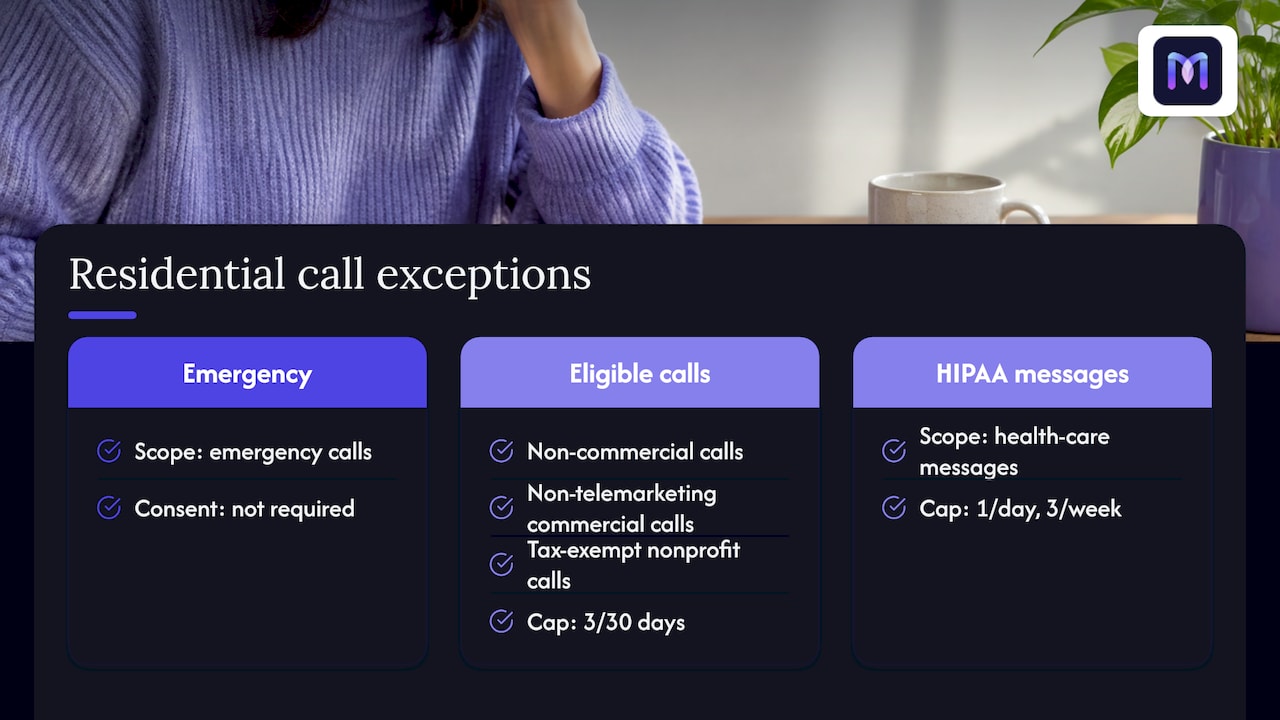
For residential lines, 47 CFR 64.1200(a)(3) allows artificial-voice calls without consent only for emergencies, or up to three calls in a 30-day period for non-commercial calls, non-telemarketing commercial calls and calls from tax-exempt nonprofits, provided they honor opt-outs. Limited HIPAA health-care messages are also allowed, at one per day and three per week. For informational calls to customers with an established business relationship, Consumer Action’s small-business guide describes the same three-calls-per-30-days cap with an opt-out mechanism. Because the law has no established-relationship exemption for prerecorded telemarketing to residential lines, never build a sales flow on that assumption.
What the voicebot must say on every call
The disclosure rules are mechanical, which makes them easy to test and easy to get wrong in a script.
- Identify the responsible business first. Under 47 CFR 64.1200(b), every artificial or prerecorded message must state, at the beginning, the identity of the business responsible for the call, using its registered business name.
- Give a callback number. It must be stated during or after the message and cannot be a 900 number or any number that charges above local rates.
- Offer an automated opt-out on telemarketing calls. Within two seconds of the identification, the bot must offer a voice or keypress opt-out that records the number to your do-not-call list and ends the call.
- Say it is AI. The FCC proposed that callers using AI-generated voice disclose that clearly at the start of each call, and that written consent forms include a disclosure that the consumer authorizes AI-generated content (FCC 24-84). Not final, but cheap to adopt. A few states already require disclosure on request: Utah’s AI disclosure statute asks a company to say when a consumer is interacting with generative AI.
A greeting that says “Hi, this is Maya” and only names the company on the third sentence fails item 1. Put the legal name in the first sentence and test it by listening to the actual audio, not by reading the script.
Opt-outs and do-not-call: the November 25, 2026 change
Callers must keep a written do-not-call policy, honor requests within 10 business days and keep records for five years. The way you process revocation is changing. The FCC adopted FCC 26-67 on September 30, 2026, and its rules take effect on November 25, 2026. Two changes matter for voicebots:
- Exclusive opt-out methods. You may designate an exclusive way to opt out, such as a keypress or a spoken phrase, if you disclose it clearly. If you do not designate one, you must keep honoring requests made by any reasonable means. The National Law Review summary covers the effective date and the category scoping.
- Category-specific revocation. An opt-out directed at an informational call or text can be limited to that category. A telemarketing opt-out revokes all telemarketing from that caller.
For a voicebot, this means your opt-out intent handling needs two decisions it may not have had before: which channel words count, and which category the call belonged to. Map each call flow to a category (service, billing, marketing) and log the category with every opt-out. If your script designates an exclusive method, the bot has to say so in plain language during the call.
If the voicebot hears “stop calling me” in free speech, it should route the request into your suppression list unless you have disclosed an exclusive method and the caller has been told what it is. When in doubt, honor the request.
Records: what a TCPA defense actually rests on
TCPA claims are mostly brought by the consumers who received the calls, through private suits, so the consent record you hold is the center of any defense. Federal telemarketing recordkeeping under 16 CFR 310.5 requires sellers and telemarketers to keep for five years a record of each telemarketing call. That includes the numbers, date, time, duration, scripts and prerecorded messages, caller ID and disposition. It also requires complete consent records: the person’s name and number, the consent request as presented, its purpose, a copy of the consent and the date given.
For AI calls, a useful consent record captures:
- Who agreed (name and phone number).
- The exact notice text and its version.
- Purposes covered: the call, recording, AI analysis, training.
- How consent was given: spoken yes, keypress or written.
- Date and time, plus a call ID linking the consent to the recording.
- Any withdrawal, with its date and category.
Consumer Action’s guide adds the version of the National Do Not Call Registry and reassigned-numbers database you checked against, and when and how consumers opted out, all retained for five years. Store the consent timestamp as a field attached to the contact record, not buried in a recording.
State recording rules sit on top of the TCPA
A voicebot that records or transcribes a call raises a separate question from the TCPA. Federal law sets a one-party consent baseline, and recording-law surveys show that a number of states, including California, Florida, Illinois, Maryland, Massachusetts, Montana, New Hampshire, Pennsylvania and Washington, require all-party consent for at least some conversations. For a contact center that calls across state lines, the simplest approach is to meet the strictest standard everywhere: tell the person at the start of the call that it is AI and that the call is recorded or transcribed, and keep the spoken acknowledgment in the recording. Confirm the rules for any state you call into with your counsel before launch.
Transcript-only bots are worth treating like recordings, since a transcript is a record of the conversation. California also amended its automatic dialing-announcing device statute, Public Utilities Code § 2874, in 2024 to define “artificial voice” in a way that can reach AI voice messages.
What a violation costs
TCPA damages run up to $500 per violation, or $1,500 if the violation is willful or knowing, and total exposure is uncapped. The FCC and state attorneys general enforce the law alongside private plaintiffs, according to Consumer Action. Because damages are per call, a campaign of thousands of calls to numbers without valid consent compounds quickly. That is why a consent check before dialing is cheaper than any defense afterward.
A pre-launch checklist for an outbound voicebot
- Classify every call flow as informational, telemarketing or dual-purpose, and assign the consent level it needs.
- Check the number type. Cell phones and residential lines have different exemptions.
- Load consent with the contact. Dial only numbers with a stored consent record, scoped to the call category.
- Script the opening. Registered business name first, then the AI disclosure, then the purpose, then the callback number.
- Build the opt-out. Keypress or voice, within two seconds on telemarketing, written to the suppression list.
- Decide your opt-out method before November 25, 2026: exclusive and disclosed, or any reasonable means.
- Log everything for five years, with call ID, consent version and opt-out category.
- Test the bot’s behavior against these rules whenever you change a prompt. Our guide on regression testing AI behavior shows how to do that for conversational agents.
For the broader control set around retention, access and audits, see our AI compliance checklist. Teams handling health information should read our guide to HIPAA compliant chatbots, and teams worried about hostile callers should read our piece on voicebot security best practices.
Building this into a voice agent platform
Compliance is easier when the script, the call flows and the reporting live in one place. Monobot is a platform for building, deploying and managing voice and chat agents, with no-code customization, so the people who own the compliance wording can edit the opening line and the opt-out prompt without waiting on an engineering sprint. Real-time analytics and interaction dashboards let you review how conversations went, and ready-made templates give each use case a starting flow. If your outbound use is lead follow-up, see our sales and lead generation use case.
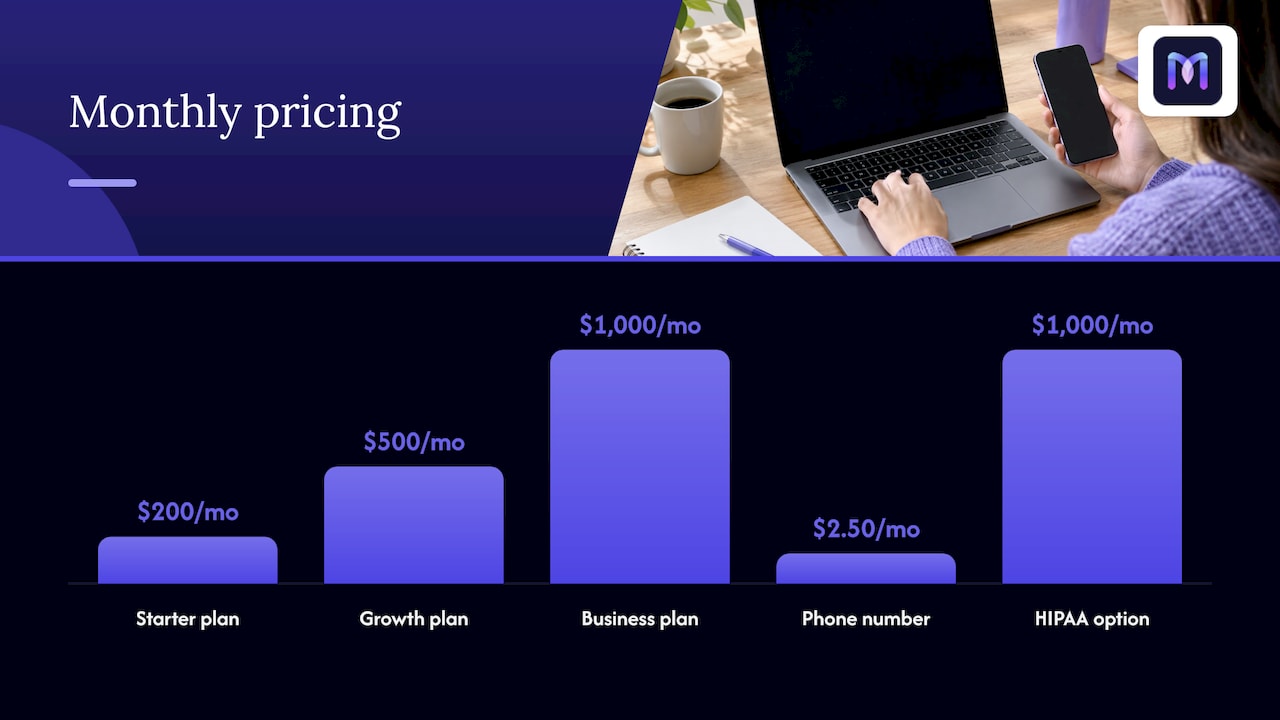
Plans start at $200 per month for Starter, $500 for Growth and $1,000 for Business. Enterprise has no published price. A phone number is $2.50 per month, and the HIPAA option is $1,000 per month. You can compare them on the Monobot pricing page.
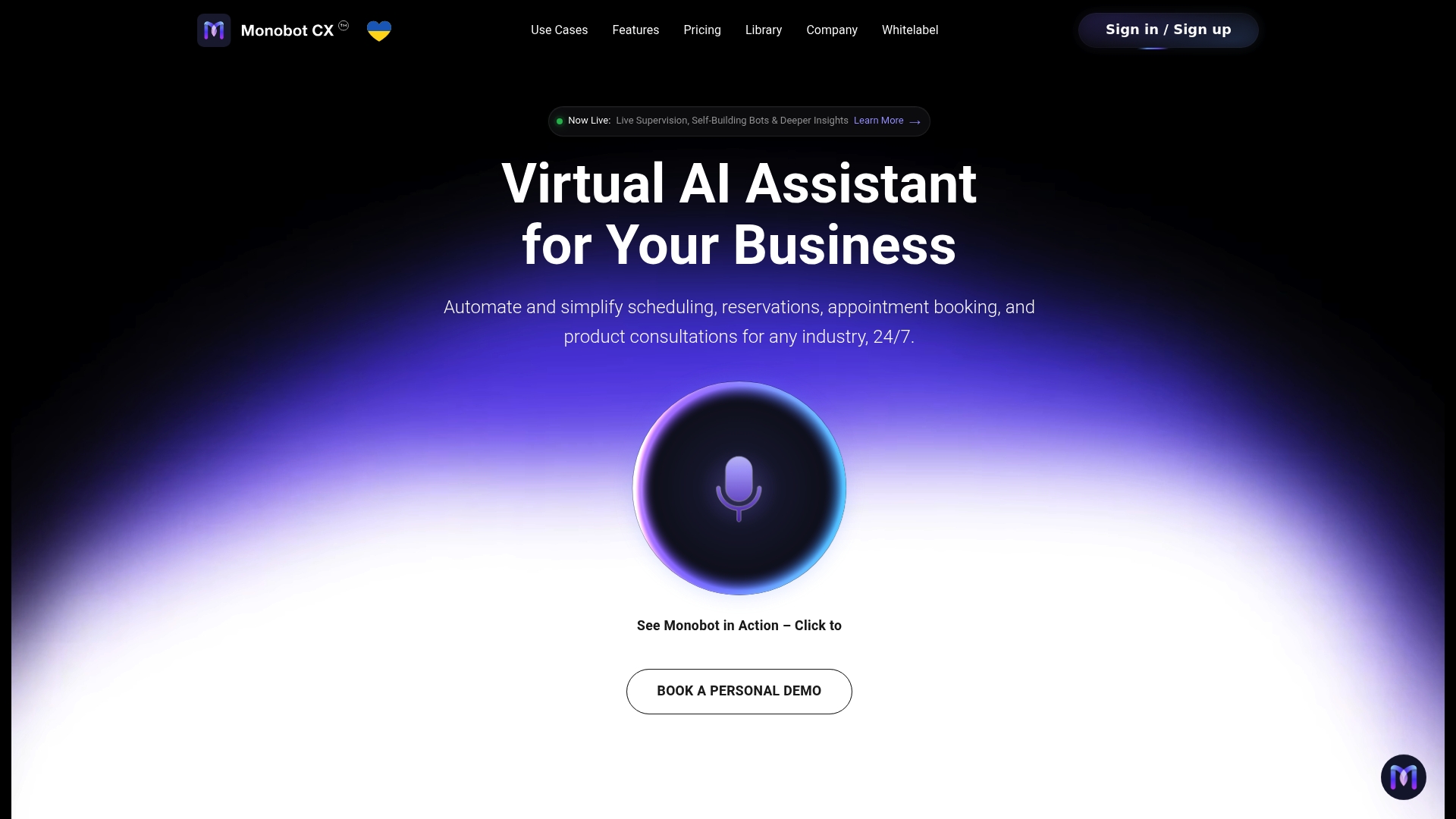
If you run a BPO or want to offer voice agents under your own brand, the white-label and OEM options cover that setup.
Our view
Most TCPA trouble we see discussed comes from the gap between the legal team’s rules and the script the bot actually speaks. A policy that says “identify the company first” does nothing if nobody can change the greeting quickly, or check that the change shipped.
That is why we build around no-code customization. Compliance owners should be able to edit an opening line, an opt-out prompt or a disclosure themselves, then review real interactions in the dashboards and analytics. Bundled pricing with no hidden fees also means you can plan call volume without surprise charges.
Our advice: start from the strictest reading. Name the business first, say it is AI, record the answer, log the consent category and honor opt-outs fast. A voicebot built that way earns trust with callers, and it automates routine calls at scale, up to 80% of inbound calls and chats in our own positioning, without putting your consent record in question.
Alex
FAQ
Does the TCPA apply to inbound voicebot calls?
The TCPA’s core restrictions target calls you place. The FCC’s 2024 proposal stated that its AI rules do not extend to technology used to answer inbound calls. Still, state recording laws and privacy rules apply to inbound calls, so disclose that the caller is speaking with AI and that the call may be recorded.
Does the TCPA require written consent?
It depends on the call. Telemarketing and advertising calls with an artificial voice require prior express written consent, to cell phones and residential lines alike. Informational calls to a wireless number can rely on oral or written prior express consent. A call that mixes the two counts as telemarketing.
Does the TCPA require an opt-out?
Yes. Telemarketing calls with an artificial or prerecorded voice must offer an automated opt-out within two seconds of the identification, and the request must be added to your do-not-call list. Informational calls under the residential exemptions must also honor opt-out requests. From November 25, 2026, you may designate an exclusive opt-out method if you disclose it clearly.
How long should I keep consent records?
Five years is the standard retention period under the FTC’s recordkeeping rule for telemarketing, and it is the period recommended for opt-out and consent logs. Keep the consent text and version, the date, the method and a call ID linked to the recording.
Sources
- FCC: TCPA applies to AI technologies that generate human voices
- Federal Register: Implications of Artificial Intelligence Technologies on Protecting Consumers from Unwanted Robocalls
- eCFR: 47 CFR Part 64, Subpart L
- FCC 15-72 Declaratory Ruling
- Federal Register: Telephone Consumer Protection Act of 1991 (2012)
- FCC: Stop Unwanted Robocalls and Texts
- National Law Review: FCC revises TCPA opt-out rules
- eCFR: 16 CFR 310.5 Recordkeeping requirements
- Consumer Action: A Small Business’s Guide to the TCPA
- Recording Law: US recording laws by state
- Shipkevich: AI voice agents, outbound calls and the TCPA
- Silverton Publishing: AI voice agents and robocall rules