



TL;DR:
- Automated customer authentication benefits from risk-based MFA, AI identity verification, and passkeys. Human review gates and proper orchestration are essential for scalability and compliance. Monobot offers conversational verification for contact centers to improve efficiency and customer experience.
Prioritize adaptive MFA, AI-powered identity verification (IDV), passkeys via the FIDO Alliance’s WebAuthn standard, and conversational voice/chat verification for contact centers. NIST SP 800-63 maps each approach to an assurance level, so you can match the right method to the right risk tier before writing a single line of code.
TL;DR:
- Onboarding (KYC): Document + selfie IDV with liveness detection, backed by automated AML screening
- Contact-center quick verification: Voice biometrics or scripted passkey prompt via a conversational agent (Monobot handles this natively)
- Account takeover (ATO) prevention: Adaptive, risk-scored MFA that steps up only when signals are anomalous
- Low-friction returning customers: Synced passkeys or behavioral biometrics for invisible continuous authentication
- High-risk transactions: Step-up flows that escalate to biometric liveness or a human reviewer
Recommended next steps for a 30–90 day pilot:
- Pick one use case (onboarding or contact-center verification), select one IDV vendor to trial (Stripe Identity, Sumsub, or Socure), and define three to five POC metrics before you start (time-to-verify, pass rate, false reject rate).
- Design your human-in-the-loop (HITL) gate first. Decide which failure conditions route to a human reviewer, what evidence they see, and what SLA governs their response. Everything else builds around that gate.
Table of Contents
- 1. What are the best customer authentication automation examples?
- What technologies power these authentication flows?
- How should you design authentication orchestration workflows?
- What compliance and privacy rules apply to U.S. authentication automation?
- How do you choose vendors and run a POC?
- What performance and cost should you expect?
- How Monobot handles conversational authentication in contact centers
- Key Takeaways
- The gap between authentication strategy and what actually ships
- Monobot brings conversational authentication to your contact center
- FAQ
1. What are the best customer authentication automation examples?
The ten examples below cover the most common automated authentication flows in production today. Each one maps to a specific use case, names the typical building blocks, and flags the key friction/security tradeoff.
1. Adaptive risk-based MFA step-up
When to use: Any login or transaction where risk signals vary by session (new device, unusual location, high-value action).
The system scores each session in real time using device fingerprint, IP reputation, behavioral signals, and transaction context. Low-risk sessions pass with a single factor; anomalous sessions trigger a step-up to push notification, TOTP, or biometric. AI risk scoring that correlates thousands of identity data points across trusted sources outperforms simple rule-based thresholds and cuts false positives significantly.
Implementation note: Integrate a risk engine (Socure, or a homegrown scoring layer) between your identity provider and your application. Most modern IdPs expose a policy engine where you can wire risk scores to step-up triggers.
Pro: Friction appears only when it is warranted. Con: Requires ongoing model tuning; a miscalibrated threshold produces unnecessary step-ups.
2. Passwordless/passkey onboarding via WebAuthn
When to use: Consumer apps or B2B portals where you want to eliminate password-related ATO from day one.
The WebAuthn API uses asymmetric public-key cryptography: the private key never leaves the device, so phishing and credential stuffing become structurally impossible. Registration calls navigator.credentials.create() and authentication calls navigator.credentials.get(). Passkeys sync across devices via a platform credential manager; FIDO security keys are device-bound for higher assurance.
Implementation note: Most major browsers and OS platforms support WebAuthn natively. Add a JavaScript client library, a server-side relying-party library, and a credential store. Stripe, Okta, and Auth0 all publish integration guides.
Pro: Near-zero friction for returning users; phishing-resistant by design. Con: Recovery flows need careful design when a device is lost.
3. Document + selfie IDV for KYC onboarding
When to use: Regulated onboarding (financial services, healthcare, lending) where you must verify a real-world identity against a government-issued document.
Automated KYC solutions combine OCR document parsing, biometric face matching, and liveness detection in a single API call. AI-driven IDV can complete verification in as little as 20 seconds, compared to minutes or days for manual review. Vendors like Sumsub, Socure, and Stripe Identity each expose this as a hosted flow or a composable SDK.

Implementation note: Embed the vendor SDK in your onboarding web or mobile app. Pass the resulting verification token to your user directory and compliance record store. Stripe Identity offers the first 50 verifications free, making it practical for a low-cost POC.
Pro: Meets KYC/AML obligations automatically. Con: Image quality failures are the top rejection cause; prioritize vendors with real-time guided capture.
4. Biometric liveness detection for high-risk transactions
When to use: Wire transfers, account changes, or any action where a static selfie is insufficient and a live human must be confirmed.
Liveness detection distinguishes a live face from a photo, video replay, or 3D mask using active challenges (head turn, blink) or passive AI analysis of texture and depth. It sits on top of standard face matching and adds a meaningful fraud barrier for high-value moments.
Implementation note: Most IDV vendors (Sumsub, Socure) include passive liveness in their standard SDK. Active liveness is an add-on. Wire the liveness result into your transaction authorization logic.
Pro: Blocks presentation attacks that defeat basic selfie matching. Con: Adds 3–8 seconds to the verification flow; test on low-end devices.
5. SMS/app push MFA for low-friction two-factor authentication
When to use: Broad consumer bases where passkey adoption is still maturing and you need a widely supported second factor.
NIST SP 800-63B classifies out-of-band authenticators (SMS OTP, push notification) as valid second factors at AAL2. Push notifications via an authenticator app are preferred over SMS because they are not vulnerable to SIM-swap attacks. The user receives a 6-digit code or a tap-to-approve prompt on a registered device.

Implementation note: Integrate with an authenticator service (Twilio Verify, AWS SNS, or a built-in IdP MFA module). Keep the OTP validity window to 10 minutes per NIST guidance.
Pro: Familiar UX; high adoption rates. Con: SMS is vulnerable to SIM-swap; migrate high-risk users to push or passkeys.
6. Behavioral biometrics for continuous authentication
When to use: Financial services or enterprise SaaS where session hijacking after login is a real threat vector.
Behavioral biometrics analyze typing rhythm, mouse movement, touch pressure, and scroll patterns continuously throughout a session. Deviations from a user’s established baseline trigger a silent re-authentication challenge or a step-up. This approach catches account takeovers that happen after a legitimate login.
Implementation note: Deploy a JavaScript agent on your web app or a mobile SDK. The agent streams behavioral signals to a scoring service. Route anomaly alerts to your risk engine.
Pro: Invisible to legitimate users; catches post-login fraud. Con: Requires a baseline-building period; cold-start problem for new users.
7. Voice or chat conversational verification in contact centers
When to use: Inbound calls or chat sessions where agents currently spend 30–90 seconds on manual identity questions.
A conversational AI agent (like Monobot’s voice or chat agent) greets the customer, collects identifying information through natural dialogue, and verifies it against your CRM or identity store in real time. Verified sessions are handed off to a live agent with a pre-populated identity card, cutting handle time. This is one of the highest-ROI customer authentication automation examples for contact centers because it removes repetitive agent work at scale.
Implementation note: Connect the conversational agent to your telephony stack (SIP/PSTN) or chat platform, wire it to your CRM via API, and define the escalation trigger for failed verifications. Monobot’s AI voice and chat agents support this pattern with pre-built integrations.
Pro: Reduces agent handle time; consistent verification every time. Con: Voice biometric enrollment requires a prior voice sample.
8. Agent-assisted identity escalation flow
When to use: Cases where automated verification fails or confidence scores fall below threshold, and a human must complete the check.
The automated system flags the session, packages the evidence (document images, liveness result, risk score, mismatch reason), and routes it to a review queue. A human agent sees a concise evidence card, not raw artifacts, and approves or rejects within a defined SLA. Camunda’s KYC agent demo illustrates this pattern: AI agents perform tool calls in a BPMN process while human reviewers hold explicit approval gates.
Implementation note: Build the review queue into your ticketing system (Zendesk, ServiceNow). Define SLA thresholds (e.g., 4-hour review window) and escalation paths for queue overflow.
Pro: Catches edge cases automation misses. Con: Manual review staffing is a real cost; design HITL gates to minimize volume.
9. Automated sanctions and watchlist screening during onboarding
When to use: Any regulated onboarding flow where AML obligations apply (banking, lending, crypto, insurance).
At the point of identity confirmation, the system automatically queries OFAC, PEP lists, and adverse media databases. A match triggers a hold and routes the case to a compliance officer. No-match results proceed automatically. Sumsub and Socure both include AML screening as part of their automated KYC pattern.
Implementation note: Wire the screening API call in parallel with document verification to minimize latency. Store the screening result and timestamp in your compliance record for audit purposes.
Pro: Meets BSA/AML obligations without manual lookups. Con: False positives on common names require a clear dispute resolution workflow.
10. Reusable KYC (identity re-validation)
When to use: Platforms where users return for multiple products or services and should not repeat full KYC each time.
A verified identity token is stored after the first successful KYC check. On subsequent onboarding events, the system checks whether the token is still valid (within its expiry window, no adverse events since issuance) and skips the document capture step. This is sometimes called “portable identity” or “reusable KYC.”
Implementation note: Define token expiry based on your risk policy (commonly 12–24 months). Build a re-validation trigger for high-risk events (name change, address change, product upgrade).
Pro: Dramatically reduces friction for returning users. Con: Requires a secure, auditable token store and a clear re-verification policy.
Pro Tip: For contact centers specifically, start with conversational verification (example 7) as your quick win. It delivers measurable handle-time reduction within weeks and does not require changes to your core identity infrastructure.
What technologies power these authentication flows?
Every example above draws from a shared set of technical components. Understanding where each one sits in your architecture helps you plan integrations and set realistic latency expectations.
Core components:
- OCR and document parsing: Extracts data fields from passports, driver’s licenses, and ID cards. Modern OCR models handle skew, glare, and low resolution, but real-time guided capture (glare/focus/crop feedback) materially increases first-time pass rates. Prioritize vendors that provide this assistive capture in their SDK.
- Biometric face matching and liveness detection: Compares a selfie to the document photo using a deep learning model. Liveness adds a presentation-attack barrier. Both Sumsub and Socure embed these in their standard IDV API.
- Risk scoring engines: Correlate device signals, behavioral data, IP reputation, and identity data points. Advanced IDV platforms use AI to correlate thousands of signals rather than simple rule checks, which reduces false positives and catches sophisticated fraud patterns.
- Behavioral biometrics: Continuous session signals (typing, mouse, touch) fed to an anomaly detection model.
- MFA mechanisms: TOTP (time-based one-time passwords), push notifications, and SMS OTP. NIST SP 800-63B defines assurance levels for each.
- Passkeys and WebAuthn: The WebAuthn API implements FIDO2 in browsers and native apps. Passkeys use asymmetric cryptography; the private key stays on the device. The FIDO Alliance positions passkeys as phishing-resistant replacements for passwords.
- Session and device trust signals: Device fingerprint, cookie-based session tokens, and hardware attestation from FIDO security keys.
- Fraud engines and sanctions checks: Real-time OFAC/PEP queries and adverse media screening, typically via a dedicated API layer.
- APIs and SDKs for embedding IDV: Client SDK → IDV provider → orchestration layer → CRM/user directory. Typical end-to-end latency for a document + liveness check runs 15–30 seconds; MFA push is near-instantaneous.
Standards to know:
- FIDO Alliance / WebAuthn: The governing standard for passkeys and phishing-resistant authentication. Plan a migration path even if you are not deploying passkeys today.
- NIST SP 800-63: Defines three Authentication Assurance Levels (AAL1, AAL2, AAL3). Map each use case to an assurance level before selecting authenticators. AAL1 allows single-factor; AAL2 requires two factors; AAL3 requires a hardware-bound authenticator.
Pro Tip: Distinguish device-bound credentials (FIDO security keys) from synced passkeys. For the highest-security environments (privileged admin access, high-value financial transactions), require device-bound keys. Synced passkeys are convenient but inherit the security of the user’s cloud account.
How should you design authentication orchestration workflows?
The right architecture is not just about which components you pick. It is about how you wire them together and what happens when something goes wrong.
Key orchestration patterns:
- Progressive verification: Start with the lowest-friction check (device trust, behavioral baseline) and step up only when risk signals warrant it. This keeps the happy path fast and reserves friction for genuinely suspicious sessions.
- Parallel validation: Run document OCR, database checks, and AML screening concurrently rather than sequentially. This is the primary lever for hitting sub-20-second verification times. Generative AI orchestration on AWS demonstrates how parallel task execution can compress onboarding time significantly.
- Reusable KYC tokens: Issue a signed, expiring token after first verification. Downstream services validate the token rather than re-running the full check. Define expiry and re-validation triggers in your policy engine.
- Session continuity and re-authentication: For long sessions, define a re-auth window (e.g., step up after 30 minutes of inactivity or before a high-value action). This prevents session hijacking without forcing a full login.
- Human-in-the-loop (HITL) review gates: Route failed or low-confidence verifications to a human queue. The reviewer sees a concise evidence card: document images, liveness result, confidence score, and the specific mismatch reason. Raw artifacts alone slow reviewers down and increase error rates.
Exception handling:
- Define explicit failure conditions and their routing rules before go-live.
- Capture immutable audit trails for every agent tool call and human decision. Camunda’s KYC agent demo treats audit trail visibility as a core feature, not an afterthought.
- Set SLA gates on manual review tasks (e.g., 4-hour response window) with escalation paths for queue overflow.
Integration checklist for orchestration:
- IDV vendor API/SDK
- CRM connector (Salesforce, HubSpot, or custom)
- Ticketing system for HITL queue (Zendesk, ServiceNow)
- Fraud engine and sanctions screening API
- Logging and monitoring (immutable logs, alerting on anomaly spikes)
- Audit trail export for compliance reporting
Pro Tip: Design your HITL gate so reviewers see a single-screen evidence summary with a clear approve/reject action. If a reviewer needs to open three tabs to make a decision, your queue will back up and SLAs will slip.
What compliance and privacy rules apply to U.S. authentication automation?
U.S. regulatory obligations for automated authentication vary by industry, but several constraints apply broadly.
Regulatory mapping:
- KYC/AML: Financial institutions, lenders, and crypto platforms must comply with Bank Secrecy Act (BSA) requirements. Automated document + liveness + AML screening satisfies the Customer Identification Program (CIP) requirement when the vendor’s process is documented and auditable.
- Record retention: BSA requires five years of identity verification records. Your orchestration layer must write verification results and timestamps to a compliant record store at the time of verification.
- State biometric laws: Illinois BIPA is the most litigated U.S. biometric privacy law. If you collect facial geometry or voiceprints from Illinois residents, you need written consent, a published retention policy, and a deletion process. Other states (Texas, Washington) have similar frameworks. Treat biometric data collection as a legal risk area and get counsel involved before deploying liveness or voice biometrics at scale.
Vendor contract questions to ask:
- Where is biometric and PII data stored? (Data residency)
- Is data encrypted in transit and at rest? (TLS 1.2+, AES-256)
- Does the vendor hold SOC 2 Type II and/or ISO 27001 certifications?
- What is the breach notification SLA? (Many enterprise contracts require 72-hour notice)
- What are the data deletion and retention terms? Can you trigger deletion on user request?
Privacy best practices:
- Collect only the identity fields your use case requires (purpose limitation).
- Capture explicit consent before biometric or document collection, with a clear plain-language disclosure.
- Build user-facing flows that explain what data is collected, why, and how long it is kept.
- Minimize PII in logs; mask or tokenize document numbers and biometric scores in non-compliance systems.
MFA blocks a very high percentage of automated account takeover attempts, which makes the compliance investment straightforward to justify in a business case. The security ROI alone typically outweighs the implementation cost for any organization handling sensitive customer data.
This article is general information, not legal or compliance advice. Confirm your specific obligations with qualified legal counsel and the relevant regulatory authority.
How do you choose vendors and run a POC?
A structured vendor evaluation prevents you from discovering critical gaps after you have already integrated.
Vendor shortlisting checklist:
- API/SDK quality: Does the vendor offer both a hosted flow and a composable SDK? Can you test in a sandbox without a sales call?
- Country and document coverage: Does the vendor support the ID types and countries your users present? (Critical for global onboarding)
- Latency SLA: What is the P95 verification time? Is it contractually guaranteed?
- Fraud detection capabilities: Does the vendor use AI risk scoring across multiple data sources, or simple rule-based checks?
- Certifications: SOC 2 Type II and ISO 27001 are baseline requirements for enterprise procurement.
- Integration templates: Does the vendor offer pre-built connectors for your CRM, ticketing system, or IdP?
- Guided capture: Does the SDK provide real-time image quality feedback to reduce first-time rejection rates?
POC metrics table:
| KPI | Target | Why It Matters |
|---|---|---|
| Time-to-verify (P95) | Under 30 seconds for IDV | Sets user experience baseline |
| First-time pass rate | High | Measures guided capture effectiveness |
| False accept rate | Very low | Quantifies fraud risk |
| False reject rate | Below 5% | Measures legitimate user friction |
| Manual review rate | Below 10% | Controls HITL staffing cost |
| Customer drop-off rate | Below 15% | Measures UX impact on conversion |
| Cost per verification | Vendor-specific | Enables budget modeling |
Questions to ask vendors during trials:
- What is your false positive/negative baseline on a dataset similar to our user population?
- How does your image guidance work on low-end Android devices?
- What does your HITL tooling look like? Can reviewers add notes and override decisions?
- How do you expose audit logs? Are they immutable and exportable?
- How does your system perform under 10x normal load?
Red flags to watch for:
- Opaque model explainability: the vendor cannot tell you why a specific verification failed
- No HITL support or a manual review queue that is entirely the customer’s responsibility to build
- No SOC 2 or ISO 27001 evidence available during procurement
- Verification times that vary by more than 3x between POC and production
- A spike in false rejects during POC that the vendor attributes to “test data quality”
For IT and internal employee verification workflows, real-world IT automation examples show how similar evaluation criteria apply when automating identity checks across enterprise environments.
What performance and cost should you expect?
Setting realistic expectations before procurement prevents budget surprises and missed SLOs.
Verification speed:
AI-driven IDV completes document + liveness checks in as little as 20 seconds under good conditions. P95 times in production typically run 20–45 seconds, depending on image quality, network latency, and vendor infrastructure. MFA push notifications and passkey assertions are near-instantaneous (under 2 seconds round-trip). Behavioral biometrics add zero perceptible latency for the user.
Cost model shapes:
| Model | Typical Shape | Best For |
|---|---|---|
| Per-transaction | — | Variable-volume onboarding |
| Tiered subscription | Monthly fee + per-check overage | Predictable mid-volume |
| Bundled platform | IDV + AML + fraud in one contract | Enterprise, high-volume |
| Free tier | Stripe Identity: first 50 verifications free | POC and early integration |
Stripe Identity’s free first 50 verifications make it a practical starting point for a low-risk POC without a procurement cycle.
Security ROI:
MFA blocks a very high percentage of automated account takeover attempts. For an organization processing thousands of logins daily, that translates directly to fraud loss prevention and reduced incident response cost. Document the baseline fraud rate before your POC so you can calculate the delta after deployment.
Hidden costs to budget for:
- Manual review staffing (even a 5% HITL rate at 1,000 verifications/day is 50 reviews/day)
- Integration engineering (plan 2–6 weeks for a production-grade IDV integration)
- Monitoring and alerting infrastructure
- Ongoing model tuning and threshold calibration
How Monobot handles conversational authentication in contact centers
Monobot’s voice and chat agents implement conversational authentication as a native capability, not a bolt-on. Here is how a typical flow works:
- Customer initiates contact via phone or chat.
- Monobot’s agent greets and collects identity signals through natural dialogue: account number, date of birth, or a passkey prompt via chat.
- The agent verifies in real time against your CRM or identity store via API. For higher-risk interactions, it can trigger an IDV vendor call (document + liveness) within the same session.
- Verified sessions are handed off to a live agent with a pre-populated identity card, eliminating the “please verify your identity again” moment that frustrates customers.
- The orchestration layer writes an audit trail to your CRM and ticketing system, capturing what was verified, when, and by which method.
Monobot automates up to 80% of inbound calls and chats, which means the majority of verification interactions complete without agent involvement. Handle time for the remaining escalated sessions drops because agents start with context rather than starting from scratch.
Recommended pilot configuration:
- Scope: Single inbound queue (e.g., account inquiries) for one product line
- Success criteria: Verification completion rate above 80%, handle time reduction of 20%+, CSAT score maintained or improved
- Required integrations: Telephony/SIP or chat platform, CRM (Salesforce, HubSpot, or equivalent), IDV vendor API for step-up cases
- Stakeholders needed: Contact center ops, security/fraud, CRM admin, compliance
- Common pitfalls: Insufficient CRM data quality (garbage in, garbage out on verification); no defined escalation path for failed verifications; skipping HITL design until after go-live
Pro Tip: Run a two-week shadow mode before going live: Monobot handles the verification dialogue but a human agent still completes the session. This lets you measure accuracy and tune thresholds without customer impact.
Key Takeaways
Automated authentication works best when you match the method to the risk level: passkeys and behavioral biometrics for low-friction returning users, AI-driven IDV with liveness for regulated onboarding, and conversational agents for contact-center verification at scale.
| Point | Details |
|---|---|
| Match method to risk tier | Use NIST SP 800-63 assurance levels to select the right authenticator for each use case. |
| IDV speed is achievable | AI-driven document + liveness checks can complete in as little as 20 seconds with guided capture. |
| MFA blocks most ATO | MFA blocks a very high percentage of automated account takeover attempts, making it the highest-ROI single control. |
| Design HITL gates first | Define failure routing, evidence packaging, and SLAs before building the automated path. |
| Monobot for contact centers | Monobot’s voice and chat agents automate up to 80% of inbound verification interactions with CRM and IDV integrations. |
The gap between authentication strategy and what actually ships
Most teams I see evaluating identity verification automation make the same mistake: they spend weeks comparing vendor feature matrices and almost no time designing the exception path. The automated happy path is the easy part. Any competent vendor can verify a clear, well-lit passport photo in 20 seconds. What separates a production-grade system from a POC that never scales is what happens to the 8–15% of sessions that do not clear automatically.
The HITL gate is where authentication automation either earns its keep or creates a compliance liability. If your human reviewers are staring at raw document images with no context, no confidence score, and no clear approve/reject workflow, you have not automated authentication. You have automated the easy cases and made the hard ones worse.
The other underappreciated factor is the passkey migration timeline. FIDO Alliance guidance is clear that passkeys are the right long-term direction, and browser support is now broad enough to deploy them to most users. But “most” is not “all,” and a passkey-only strategy today will strand a meaningful segment of your user base. The practical answer is to deploy passkeys as the preferred path, keep a fallback MFA option, and measure passkey adoption monthly. The migration is a multi-year project, not a single sprint.
Monobot brings conversational authentication to your contact center
Contact centers that still rely on agents to manually verify every caller are leaving measurable efficiency on the table. Monobot’s AI voice and chat agents handle the verification dialogue automatically, confirm identity against your CRM in real time, and hand off to a live agent only when the interaction genuinely needs a human. That means your agents spend their time on complex issues, not on reading back security questions.
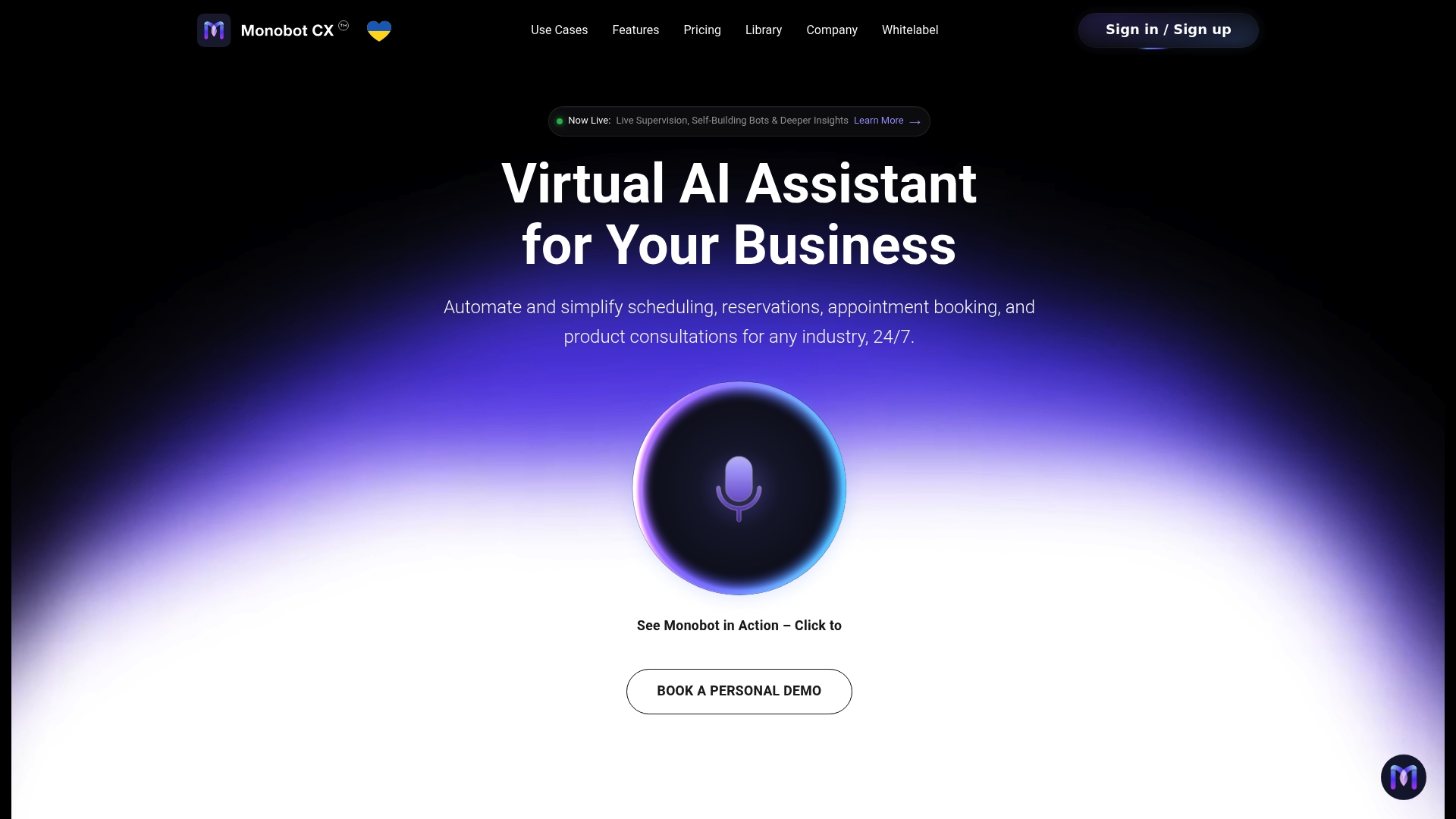
The AI Agent Builder lets you configure verification flows, escalation triggers, and CRM integrations without writing custom code. Industry templates for banking, healthcare, retail, and logistics give you a working starting point in minutes. Real-time analytics and reporting track verification completion rates, handle time, and escalation volume so you can tune thresholds and demonstrate ROI to stakeholders.
Schedule a demo to see a live conversational authentication flow, or start a pilot on a single inbound queue and measure the impact in 30 days.
Authoritative sources and further reading
- NIST SP 800-63B: The definitive U.S. standard for authentication assurance levels; use it to map each use case to the right authenticator class.
- FIDO Alliance Passkeys: Guidance on passkey deployment, phishing resistance, and migration from passwords.
- WebAuthn API (MDN): Technical reference for implementing WebAuthn in browsers and native apps.
- Stripe Identity: Hosted IDV with guided capture and a free tier for POC integration.
- Sumsub KYC Automation: Document + liveness + AML screening in a single API; useful for regulated onboarding.
- Socure Identity Verification: AI risk scoring across thousands of identity signals; strong for reducing false positives.
- Camunda KYC Agent Example (GitHub): Open-source BPMN orchestration demo with AI agents and HITL approval gates.
- AWS Generative AI Onboarding Sample (GitHub): Reference architecture for AI-orchestrated onboarding with OCR and selfie matching.
- Ondato Authentication Methods: Overview of authentication approaches with MFA effectiveness data.
FAQ
What is an example of automated customer authentication?
A conversational AI agent that greets an inbound caller, collects account details through natural dialogue, verifies them against a CRM in real time, and hands off a verified session to a live agent is one of the most common automated authentication examples in contact centers. Monobot implements this pattern with voice and chat agents that integrate directly with your CRM and IDV vendor.
How do you automate a KYC process?
Automated KYC combines document OCR, biometric face matching, liveness detection, and AML screening in a single orchestrated API flow. AI-driven IDV can complete this in as little as 20 seconds, with failed or low-confidence cases routed automatically to a human review queue.
What does MFA actually block?
MFA blocks a very high percentage of automated account takeover attempts, making it the single highest-ROI authentication control available. Push-based MFA via an authenticator app is more resistant to SIM-swap attacks than SMS OTP.
What are passkeys and when should you use them?
Passkeys use the WebAuthn standard to replace passwords with device-bound cryptographic keys, eliminating phishing and credential stuffing by design. Deploy them as the preferred authentication path for consumer and B2B apps today, with a fallback MFA option for users on older devices.
How long does automated identity verification take?
AI-driven document plus liveness verification completes in as little as 20 seconds under good conditions, with P95 production times typically in the 20–45 second range. MFA push and passkey assertions are near-instantaneous, under 2 seconds round-trip.